Related financing path

Models
Finance an Elgin Eagle mechanical sweeper. New and used machines, challenged credit reviewed, statement-based review below roughly $400k, funding paced to the completed file.
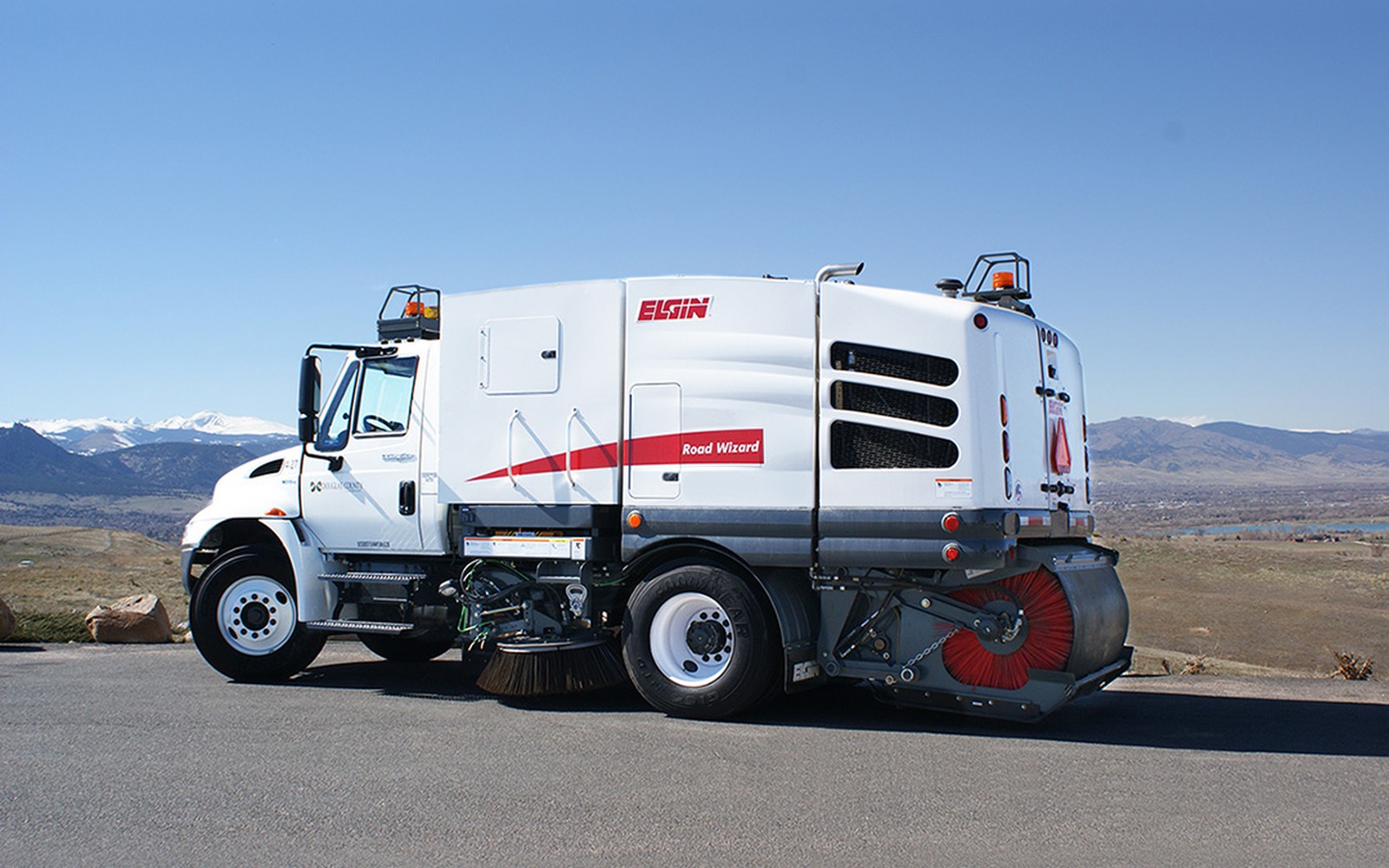
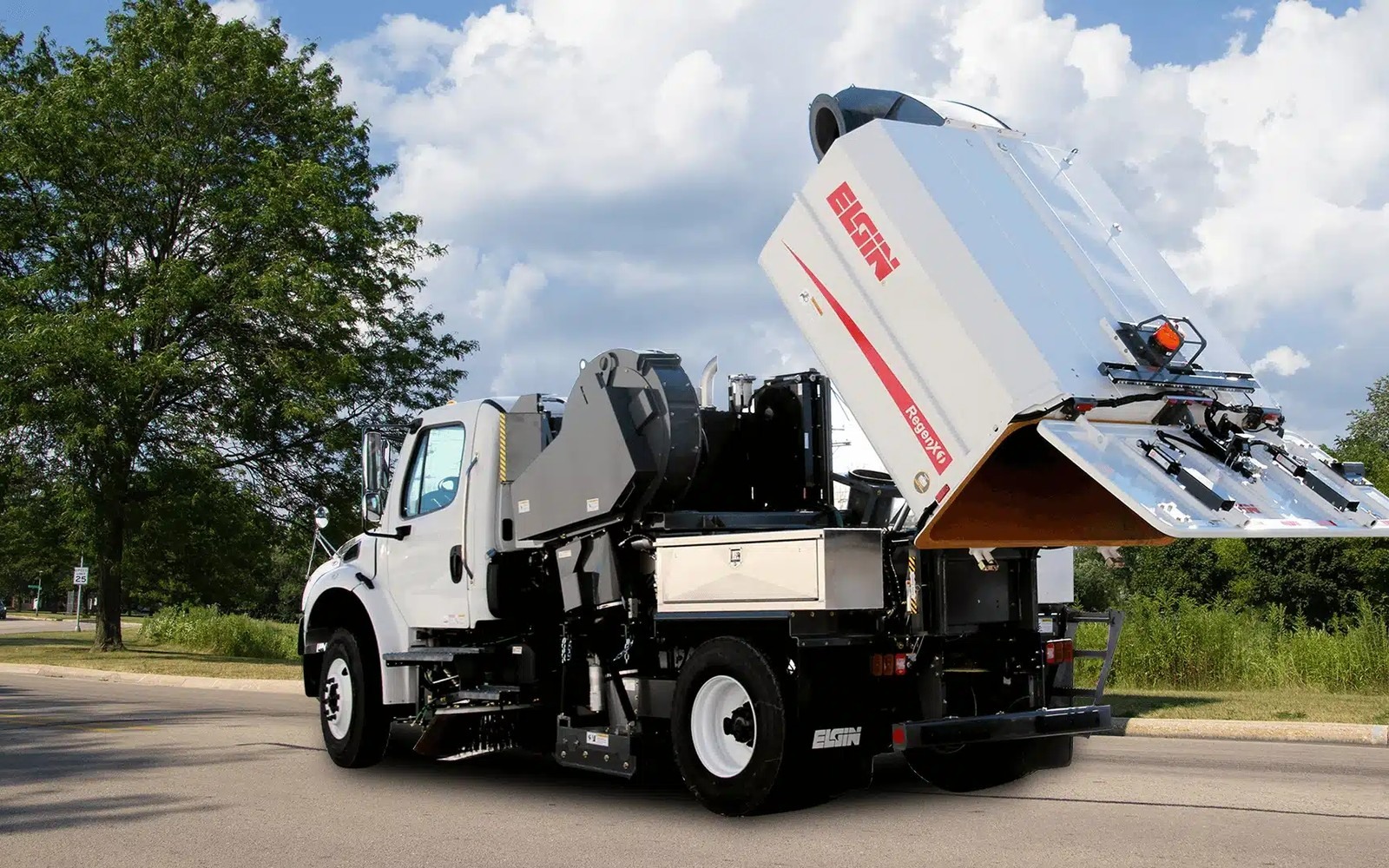
Four cubic yards of hopper, dual gutter brooms, and a conveyor pickup that keeps fine debris from bouncing back out of the broom path. The Eagle is Elgin's high-capacity mechanical sweeper platform, spec'd for operators who cannot afford to stop and dump more than twice per shift. It runs routes hard: arterials, downtown grids, large commercial properties, and industrial lots where a lower-capacity machine would burn time on dump cycles instead of covering ground.
Elgin designed the Eagle on a truck-mounted chassis with a Cummins engine powering both propulsion and the auxiliary sweep drive. The main broom is side-mounted, which positions the pickup point close to the curb without requiring the operator to ride the gutter tire. Pickup head height is adjustable for uneven pavement, and the water spray system suppresses dust at the pickup point before material enters the conveyor. For operators working PM-10 compliance routes, that dust suppression is a real operational requirement, not a nice-to-have.
We fund Elgin Eagles from $50,000, new or used. The full Elgin program covers every model they build, and Eagles are one of the more common machines we close. Call or apply online, send three months of bank statements, and we get you an answer fast.
The Eagle's four-cubic-yard hopper is the number most operators quote when they are comparing it against competitors. On a standard residential-to-arterial mixed route, that hopper volume translates to fewer trips back to the dump site, which on a night shift can be the difference between finishing before dawn or running long into morning traffic. Night crews running downtown accounts pay close attention to this because their contract windows are often just a few hours.
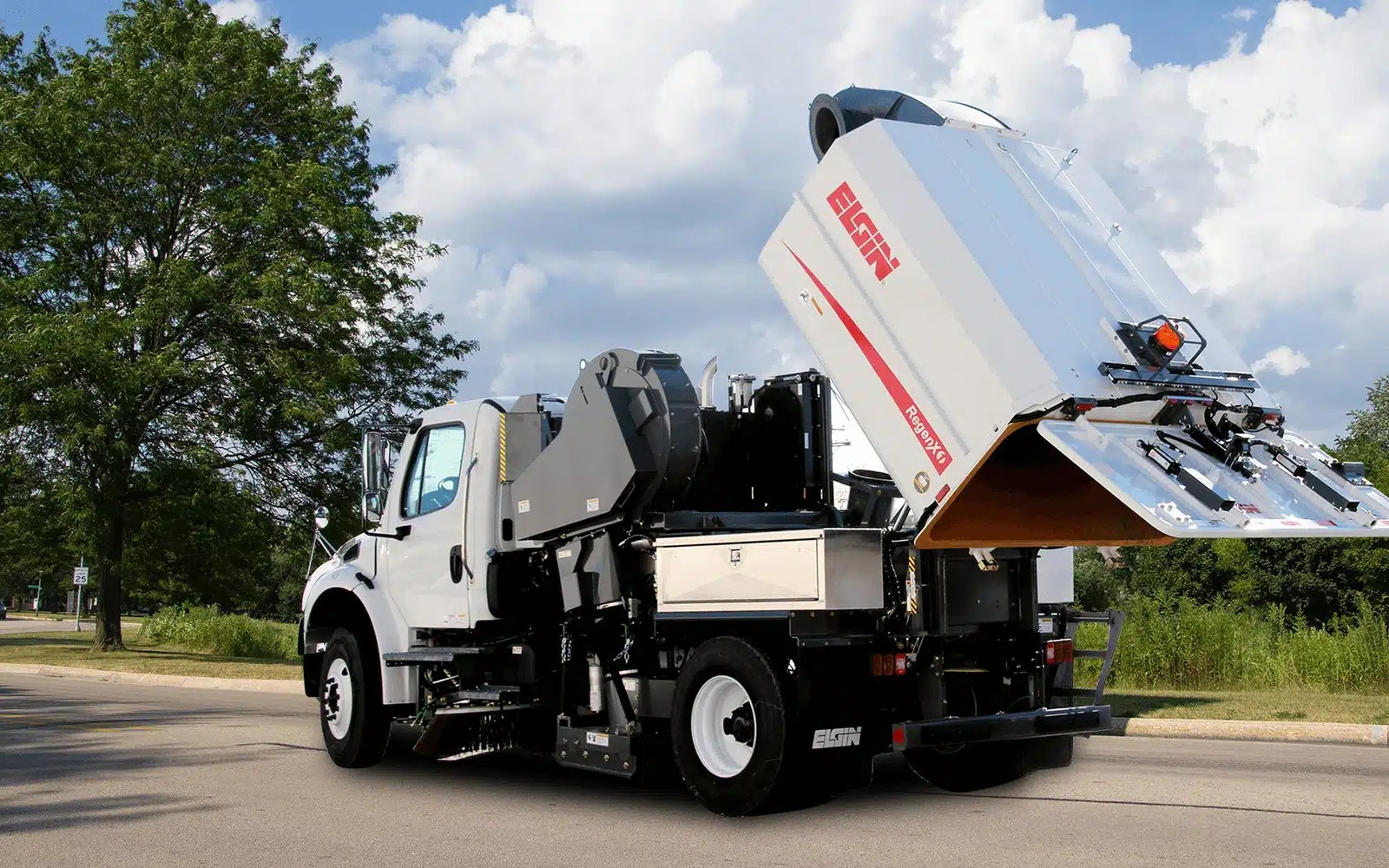
The conveyor pickup on the Eagle is a key differentiator from broom-throw designs. The side main broom sweeps debris to the conveyor intake, the conveyor lifts it into the hopper, and re-entrainment is minimal. On fine debris routes like post-event cleanup or construction site sweeping, that containment quality matters. Material goes into the hopper and stays there rather than trailing back out through the tailgate gap.
Used Eagles from the last ten years are widely available through sweeping equipment dealers and fleet auctions. Units with 3,000 to 6,000 hours on the auxiliary engine are commonly financed through our program. We look at overall machine condition rather than age alone, and a well-maintained Eagle at 6,000 hours is a better financing risk than a poorly maintained one at 2,000.
Operators comparing the Eagle against four-wheel mechanical sweepers from other manufacturers should note that Elgin's parts support and dealer network in North America is among the most established in the class. That support matters when a machine goes down at 2am and you need a gutter broom arm before the next shift.
Day one: you submit the credit application and attach three months of bank statements. We review the file and reach out with questions the same day if anything is missing. Most files have everything we need on the first submission.
Day two to three: underwriting reviews credit and cash flow and reaches a decision. For application-only deals under $400,000, there is no financial statement requirement, so the turn is fast. We work with multiple lenders, which means if one source passes on the credit profile, we have others to try without starting over.
Days three to ten: once approved, we issue the documentation package for signature. The seller gets payment wired after documents are confirmed, and you take possession. Total elapsed time from a clean application to funded is typically seven to fourteen days.
Application-only financing is the right path for most Eagle purchases. If your deal is larger or involves multiple machines, we may need additional documentation, but the process stays the same. No surprises after the approval call.
New Eagles from a dealer will carry a price tag generally landing between $220k and $290k depending on specification, chassis choice, and regional pricing. That puts a new machine comfortably inside application-only territory with room for a down payment if the buyer wants to reduce the monthly load. Terms on a new unit typically run four to seven years.
Used Eagles in good mechanical condition can be found landing between $90k and $180k. The sweet spot we see most often is a four- to six-year-old machine with a fresh auxiliary engine service and documented hopper maintenance, priced around $120,000 to $150,000. That is a deal that funds on three months of statements with no extras required.
A lease structure on an Eagle works well for operators who want the option to upgrade when the next emissions standard changes or when a newer platform comes available. The lower monthly payment on a lease frees up cash for fuel, broom consumables, and the water cost on dust suppression routes. At lease end, you exercise the buyout or hand the machine back, depending on what the market looks like.
Operators in construction cleanup or post-paving roles might also benefit from a seasonal or deferred-payment structure that aligns payments with the months the machine is earning, rather than carrying a full payment through the winter off-season.
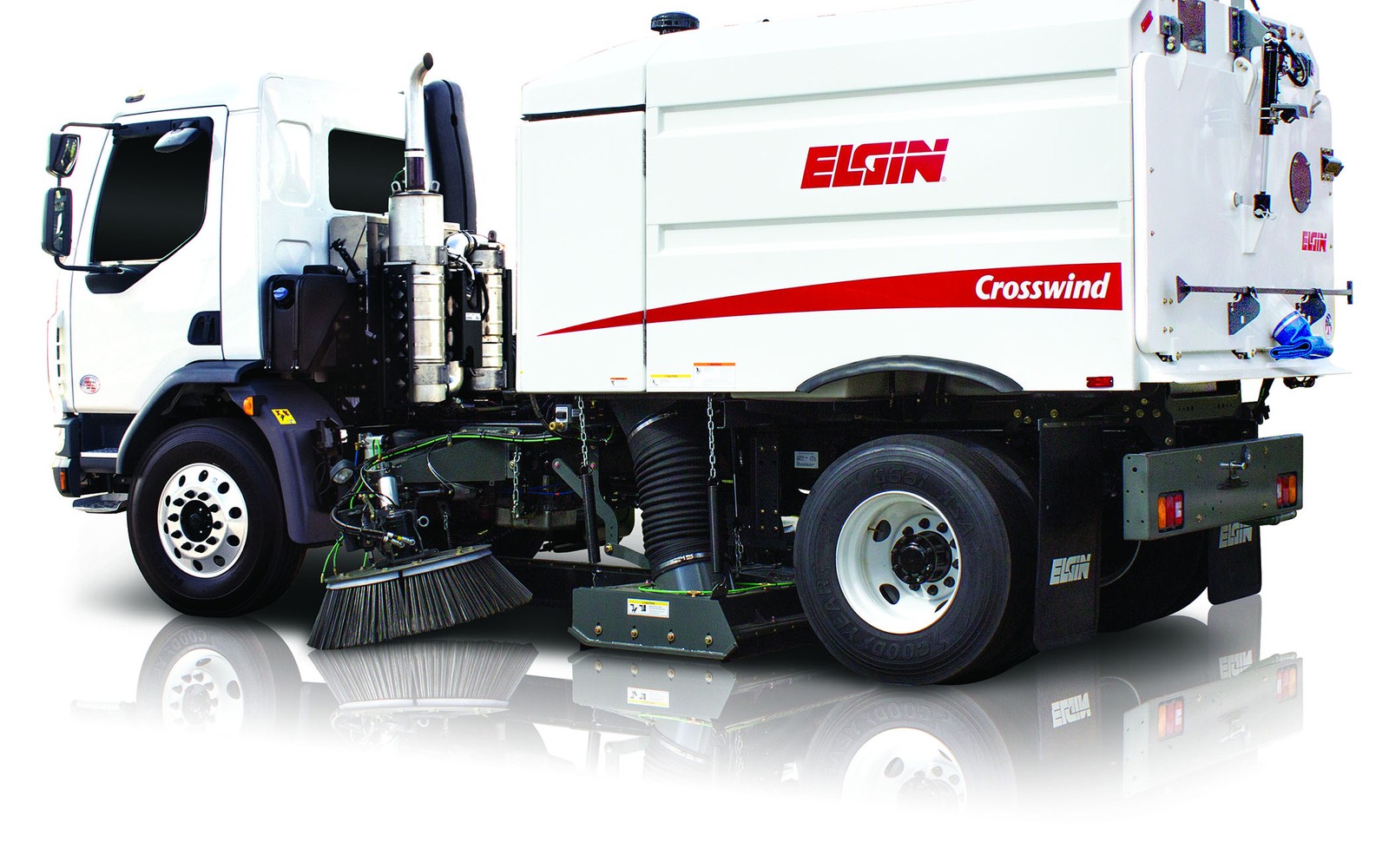
Send us the details on the Eagle you're looking at and we will put numbers together quickly. New dealer unit, used fleet dispersal, or a private-party machine you found on your own, we fund all of it. challenged credit is fine. Most deals close inside two weeks. If you are still comparing options, the Elgin Crosswind regenerative-air machine is another common Elgin platform we finance for operators who want dustless operation on PM-10 routes.
Equipment questions
Clear answers before the equipment file moves to review.
Yes. A cash-out refinance on a machine you own free and clear, or nearly free and clear, puts a lump sum in your account against the machine's current market value. The machine stays in service and you make monthly payments on the new note. We see this used most often to fund fleet expansion or cover major contract startup costs.
A rebuilt auxiliary engine is generally neutral to positive. It means the high-wear component is fresh. What matters more is who did the rebuild and whether there is documentation. A rebuild at a reputable engine shop with paperwork is much better than an undocumented field rebuild.
Absolutely. Construction cleanup sweeping is a primary use case for the Eagle. Paving and milling contractors use these machines regularly. Your business type does not limit the financing options available.
Down payment requirements vary by credit profile. Strong credit with solid bank statements can sometimes close with no money down or minimal down. challenged credit profiles typically require 10 to 20 percent. We quote specific terms once we review the full file.
Section 179 allows businesses to deduct the full purchase price of qualifying equipment in the year it is placed in service, up to annual limits set by the IRS. A financed Eagle qualifies. Consult your accountant for your specific situation, but the deduction can substantially reduce the after-tax cost of ownership in year one.
Keep exploring
Compare adjacent equipment, model, market, and service-area pages.
Equipment desk
Send the machine, seller, hours, and timing. The equipment desk will organize the next step.