Related financing path

Sweeper Types
Finance truck-mounted street sweepers for municipal routes, highway corridors, and contractor fleets. New or used, challenged credit reviewed, funding paced to the completed file.
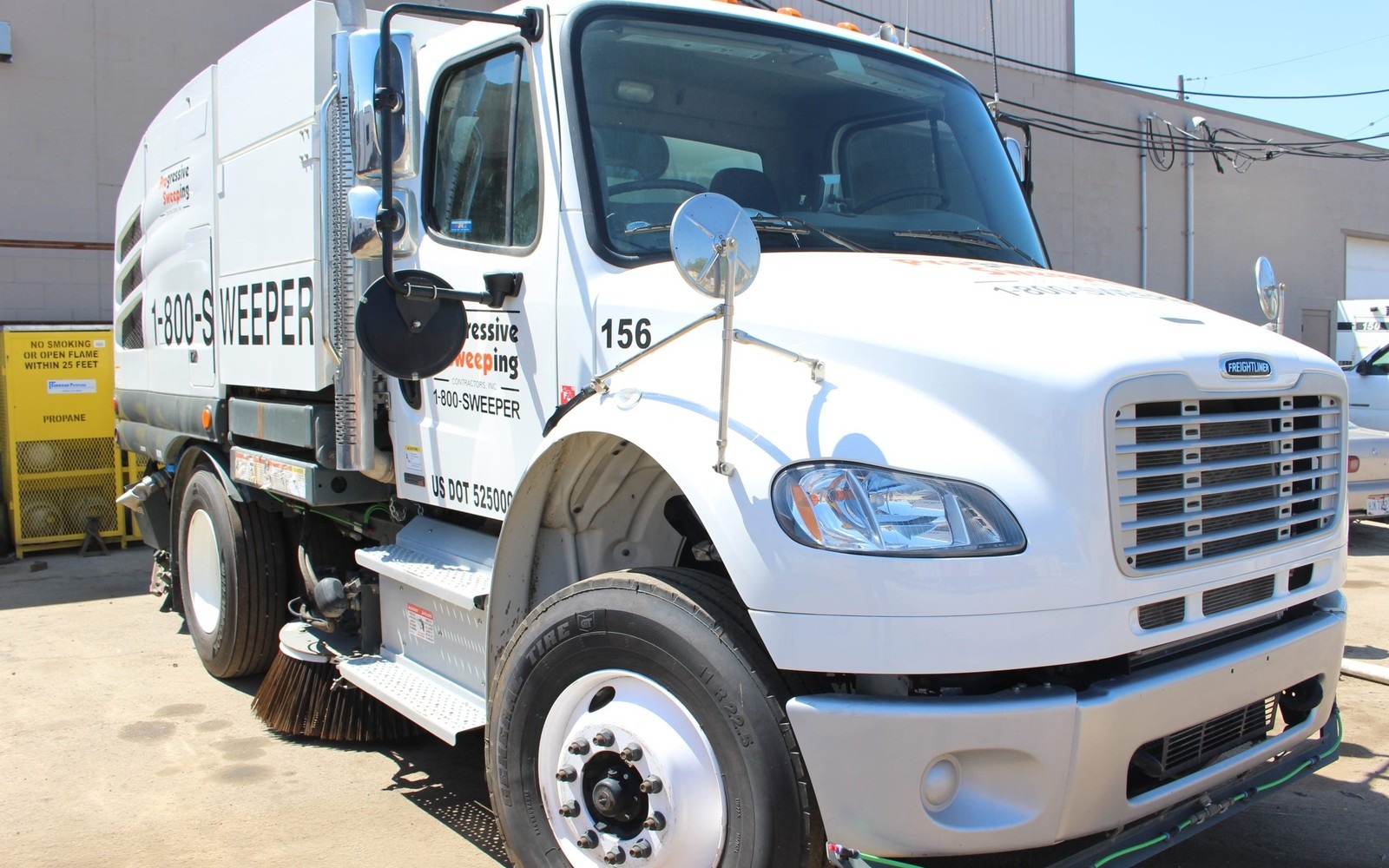
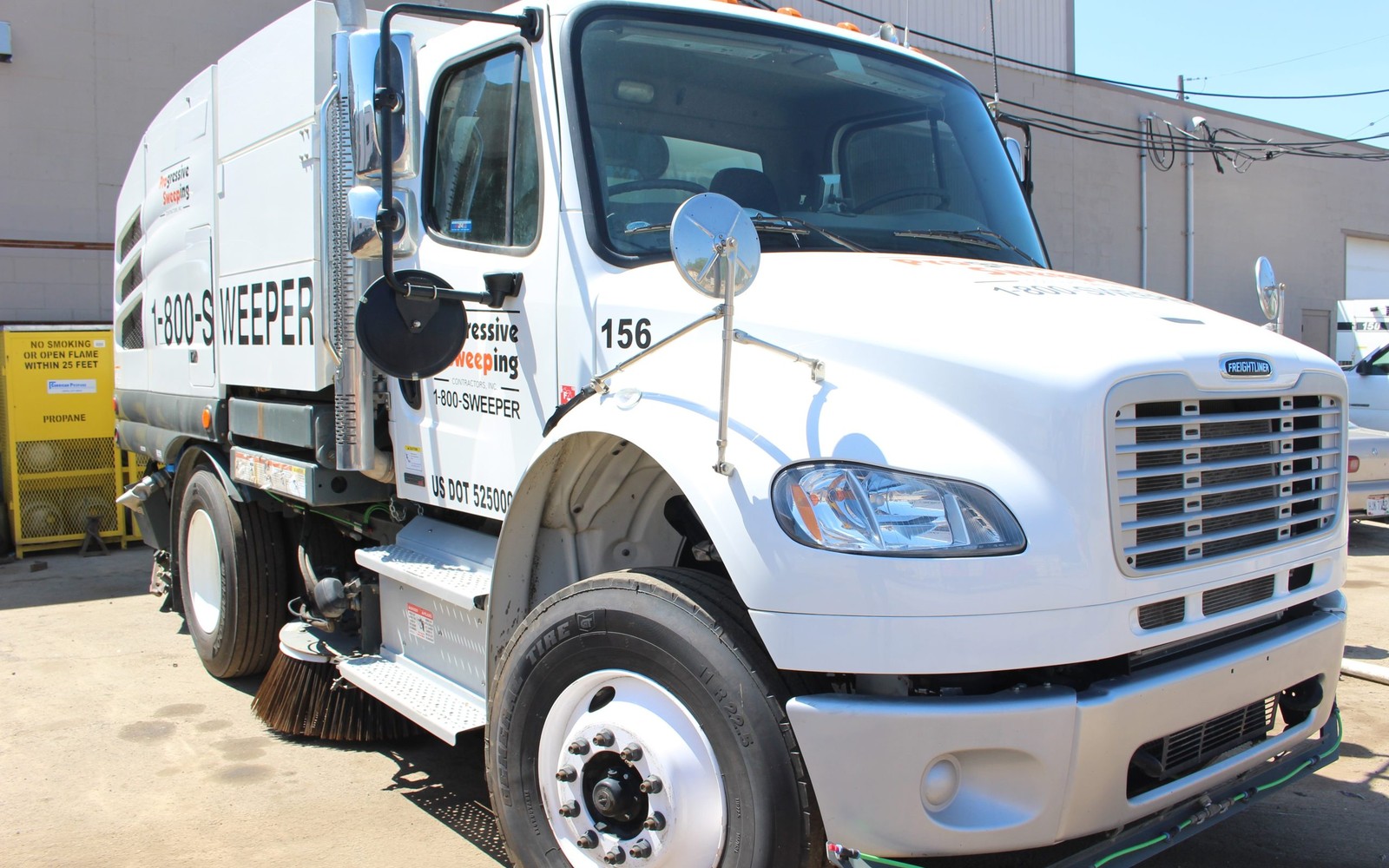
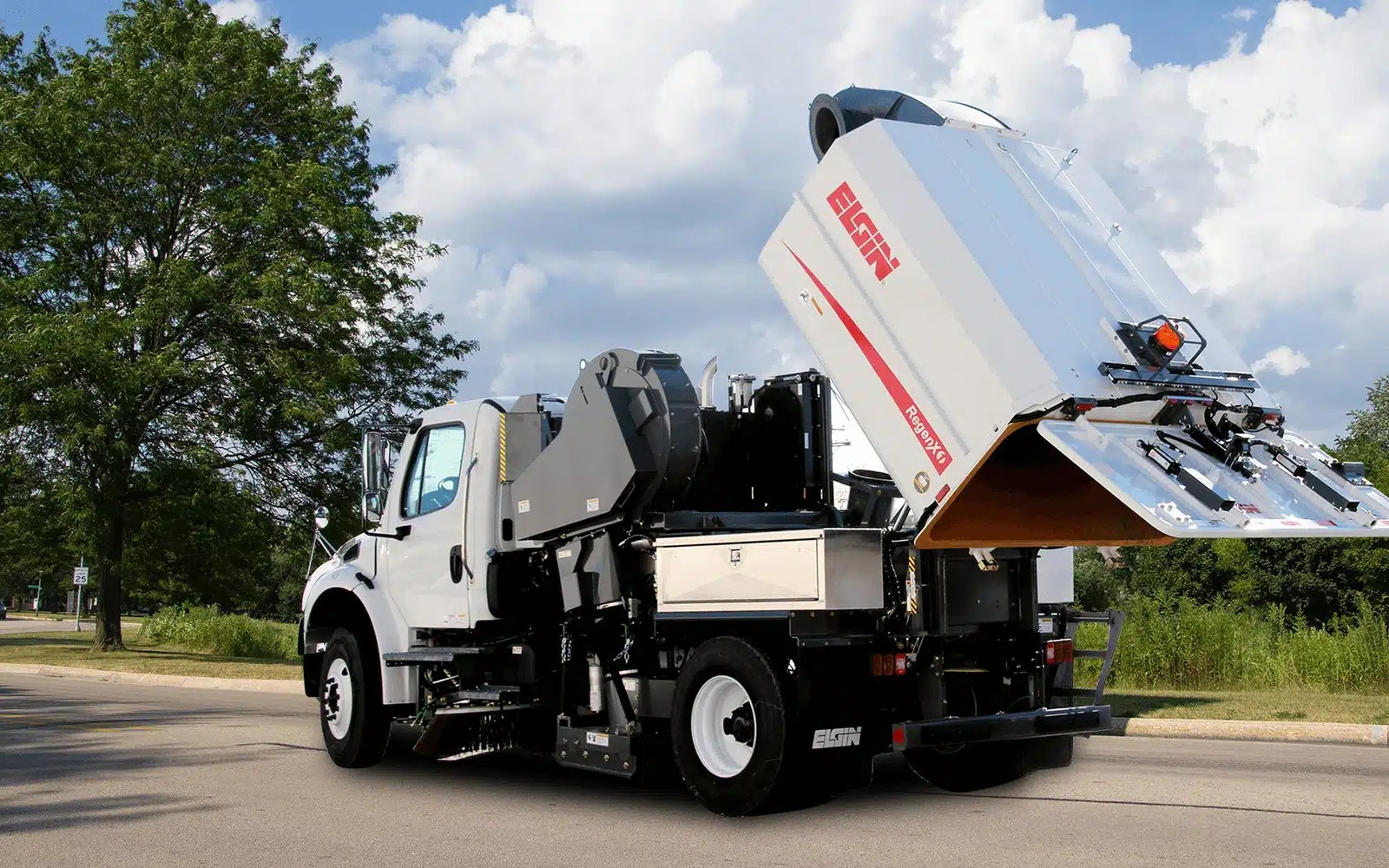
Every sweeper that drives itself to the route is a truck-mounted sweeper. The chassis is the delivery system and the sweeper body is the work unit, and the combination determines what routes you can run, how far you can go, and how much debris you bring back before you need to dump. When a sweeping contractor or a city DPW talks about buying a sweeper, they are usually talking about a truck-mounted unit because that is the platform that moves between sites under its own power, covers highway-speed arterials, and carries enough hopper capacity to run a full shift without a mid-route dump.
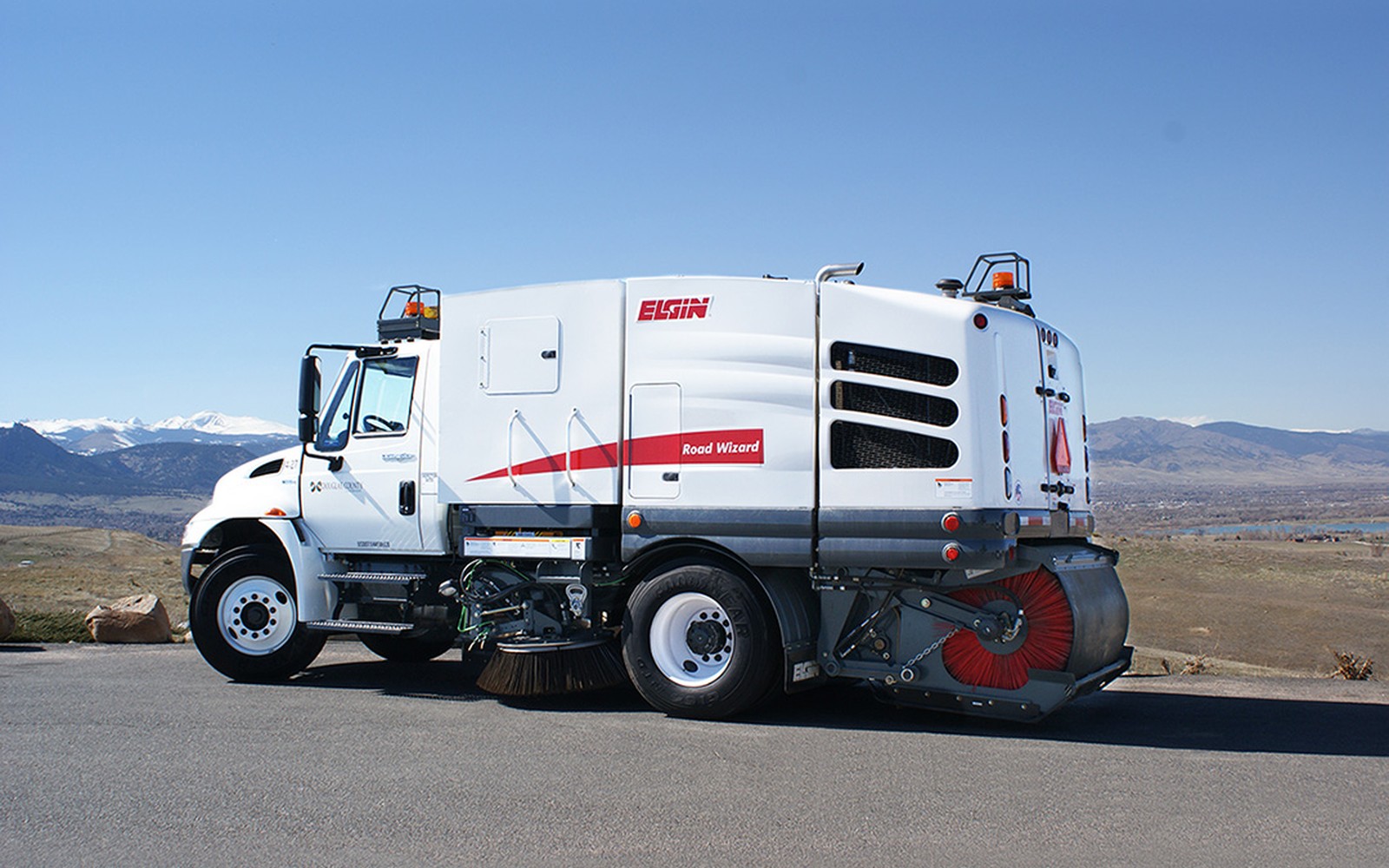
Truck-mounted sweepers cover all three major sweeping technologies: mechanical broom, regenerative-air, and pure-vacuum. What makes a unit a truck-mounted sweeper is the chassis relationship, not the sweeping method. The sweeper body is integrated onto a commercial truck chassis, typically a medium or heavy-duty Class 6, 7, or 8 cab-chassis from International, Freightliner, or Ford, with the sweeper body built by Elgin, TYMCO, Schwarze, Johnston, Stewart-Amos, or Global. The chassis and body together determine the machine's street address, and the financing covers the combination as a single asset.
New truck-mounted sweepers across all types run $180,000 to $340,000 depending on chassis class, sweeper technology, and hopper capacity. Used units with good service histories come in at $80,000 to $180,000. We finance truck-mounted sweepers from $50,000, new or used, with challenged credit can still be reviewed. Statement-based review applies below roughly $400,000. Funding moves once the file, title, and seller package are complete, which is fast enough to match most contract start dates if you move quickly on the application.
The chassis class determines the machine's highway performance, legal weight rating, and cab type. Most municipal and contractor truck-mounted sweepers run on Class 6 or Class 7 chassis, roughly 19,500 to 33,000 lb GVWR, which allows operation on urban streets without bridge posting restrictions. Class 8 chassis are used on larger-capacity units, particularly those with high-dump hoppers or 5-plus cubic yard debris body configurations.
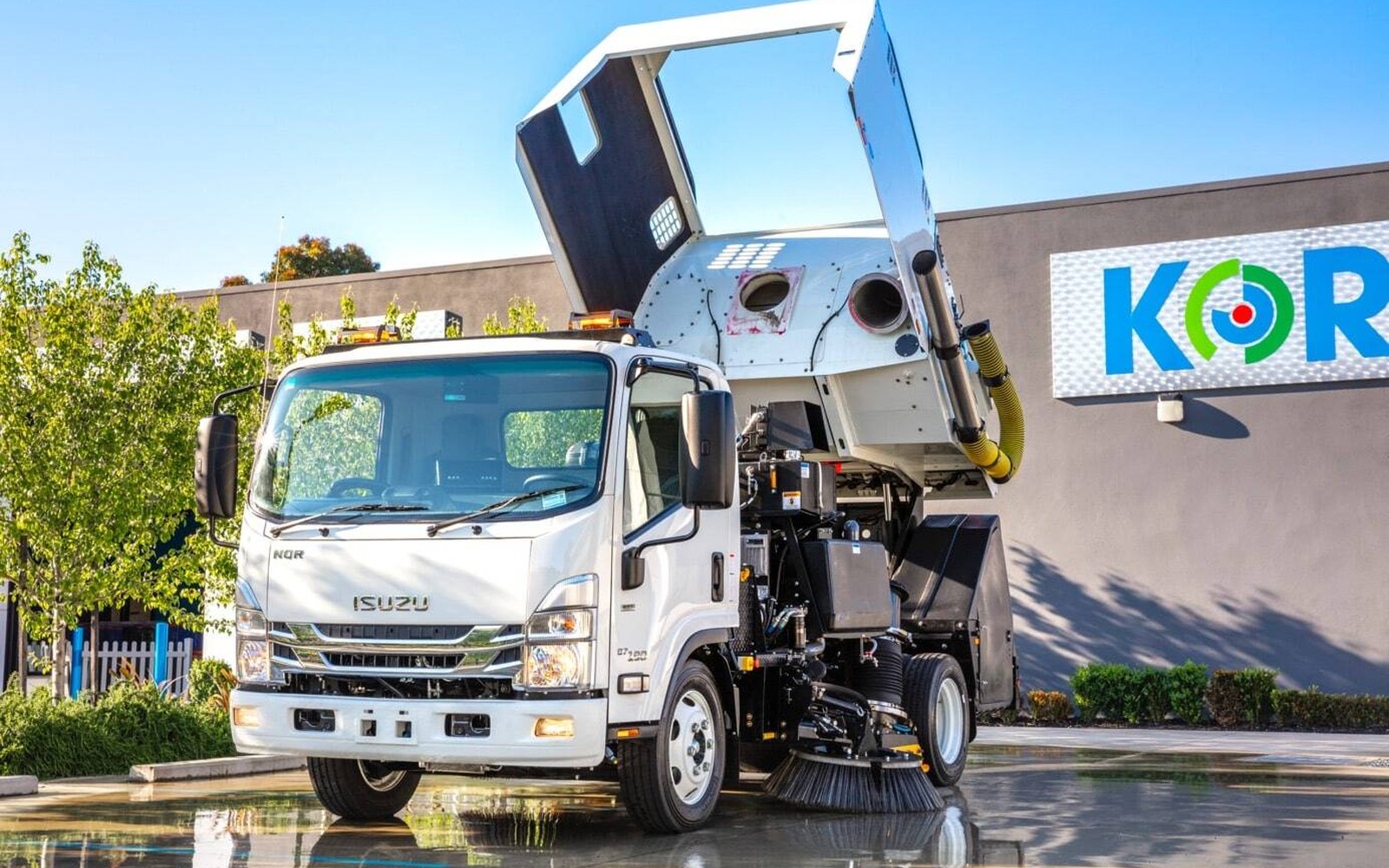
The sweeper body is mounted as a separate unit from the cab-chassis and is driven by either the truck's PTO (power take-off from the transmission) or a dedicated auxiliary engine. Auxiliary-engine sweepers are preferred when the sweeper system needs to run at variable RPM independently of the truck's road speed, which is important for regen-air fan performance. PTO-driven sweepers are simpler and cheaper to maintain but tie sweeper performance to the truck's engine speed. Most municipal buyers specify auxiliary-engine bodies for the operating flexibility.
Hopper capacity on standard truck-mounted sweepers ranges from 3 to 5 cubic yards for mechanical broom and regen-air types. High-dump configurations extend that effective capacity by allowing the hopper to discharge into a transport vehicle without the sweeper needing to drive to a dump site. The TYMCO 500x high-side-dump model is a well-known example of a high-dump truck-mounted configuration designed for high-productivity municipal routes.
Municipal street departments are the dominant buyers of truck-mounted sweepers. A city that runs residential, arterial, and downtown sweeping programs needs truck-mounted units because the route distances are too long for compact or trailer-mounted machines and the debris loads too heavy for parking-lot-scale equipment. Municipal public works departments in mid-size and large cities typically run fleets of six to twenty-plus truck-mounted sweepers, replacing units on rotation as they age out.
Sweeping contractors that have grown beyond parking-lot work into municipal subcontracts, state highway contracts, and construction cleanup on DOT projects need truck-mounted equipment to bid those contracts. A contractor running parking-lot units only is not competitive on a state highway sweeping contract. Moving up to truck-mounted sweepers is the step that opens the door to government contracts, and those contracts are where the serious sweeping revenue lives. Road construction companies also buy or lease truck-mounted sweepers to support paving and milling operations where debris control across a highway lane is part of the scope.
The chassis-mounted sweeper format gives contractors flexibility when chassis repairs are needed: in some cases the body can be remounted on a new chassis if the sweeper body still has life in it, avoiding the full replacement cost of a new integrated unit. That flexibility also affects financing decisions, as the sweeper body and chassis may have different depreciation and collateral profiles.
Truck-mounted sweeper financing is equipment financing secured by the machine itself. The lender holds a lien on the sweeper and chassis as a single titled asset. Monthly payments run on terms from 36 to 72 months. The sweet spot for most contractors and municipal fleets buying landing between $150k and $250k is a 60-month term, which keeps the monthly payment manageable while not extending the debt beyond the machine's useful service life.
Municipal buyers often use municipal lease-purchase structures, which allow a government entity to finance the equipment as an annual appropriation obligation. Municipal lease-purchase for sweepers does not require a bond issue or voter approval in most states, and the interest component is often tax-exempt, reducing the effective borrowing cost compared to commercial financing.
Private contractors who own multiple truck-mounted sweepers can often use sweeper refinancing to consolidate payments or pull equity from paid-off units. A contractor running four sweepers with two of them owned free and clear has working capital sitting in those machines that can be freed up through a refinance. We structure fleet-level transactions as well as single-unit deals.
Equipment questions
Clear answers before the equipment file moves to review.
Yes. When a chassis and sweeper body are purchased together and titled as a unit, we finance the full combination as one deal. If the chassis and body are on separate invoices from different sellers, we may need to coordinate two purchase agreements, but we have done that before. Tell us the configuration and we will work it out.
If the machine is identified and the application comes in today, three weeks is tight but possible, especially if the deal is clean and the seller moves quickly on paperwork. We push for a ten-business-day close on clean files. Three weeks gives you some margin. Do not wait.
Yes. A TRAC lease is available for truck-mounted sweepers that are classified as over-the-road motor vehicles. Since the sweeper is mounted on a licensed commercial truck chassis, it qualifies as a vehicle for TRAC purposes. TRAC leases offer a terminal rental adjustment clause that gives you flexibility on the buyout at the end of the term.
A tax lien complicates things but does not automatically kill a deal. We need to understand the lien status: is it active, is it on a payment plan, has it been partially released? Many lenders will work around an older lien on a payment plan, particularly if the bank statements show strong current cash flow and the lien is subordinate to our position.
Yes. Seventy-two month terms are available on truck-mounted sweepers in that price range. The machine needs to have enough remaining useful service life to justify the longer term. A new or low-hour used unit from a reputable manufacturer easily supports a 72-month term. An older high-mileage machine may not.
Keep exploring
Compare adjacent equipment, model, market, and service-area pages.
Equipment desk
Send the machine, seller, hours, and timing. The equipment desk will organize the next step.