Related financing path

Sweeper Types
Finance a demo or low-hour street sweeper. New-machine specs, used-machine price. We fund Elgin, TYMCO, Schwarze, and more from about $50,000 with challenged credit reviewed.
A demo unit comes off the lot with a few hundred hours on the clock and still smells like the factory. The sweeper body has been shown at a trade exhibition or used for a dealer trial run, so the price drops by a meaningful percentage off list, but the machine itself is essentially new iron. Gutter brooms are barely broken in. The hopper seal is still clean. For an operator adding a second truck or replacing an aging unit, a demo is one of the cleaner equipment decisions you can make.
We finance demo and low-hour street sweepers from $50,000 on up. That covers regenerative-air units, mechanical broom trucks, pure-vacuum sweepers, and the specialty machines in between. New or demo or a low-hour used unit, the paper works the same way: application, three months of bank statements, and we fund inside a week or two. challenged credit considered. If the machine has the hours and the price makes sense, we can usually make the deal work.
Demo inventory moves fast at dealer lots, especially after trade-show season when floor models come back and get priced to clear. The operators who close on that inventory quickly are the ones with financing already in motion. That is where we earn our keep.
The industry does not have a universal definition, but in practice a demo sweeper is a machine that left the factory, got registered or demonstrated, and now sits on a dealer lot with fewer hours than a typical one-year-old used unit. Most dealers draw the line somewhere between 200 and 600 hours, though that varies by manufacturer and sweeper class. A regenerative-air truck that ran 400 hours of municipal demonstration work is a different story than a parking-lot unit that went to two trade shows.
For financing purposes, we look at the machine year, total hours, and the dealer or seller's asking price relative to the new list price. Demo sweepers tend to hold residual value well, which makes them straightforward to finance. The depreciation curve has already taken its steepest drop from the original MSRP, but the machine still has the bulk of its service life ahead of it.
Low-hour used sweepers, generally under 1,000 hours on the original powertrain, often get lumped into the same financing conversation. Whether the seller calls it a demo, a slightly used, or a pre-owned fleet trade, the structure does not change much. We underwrite the machine on its condition and hours, not just on how the seller chose to label it.
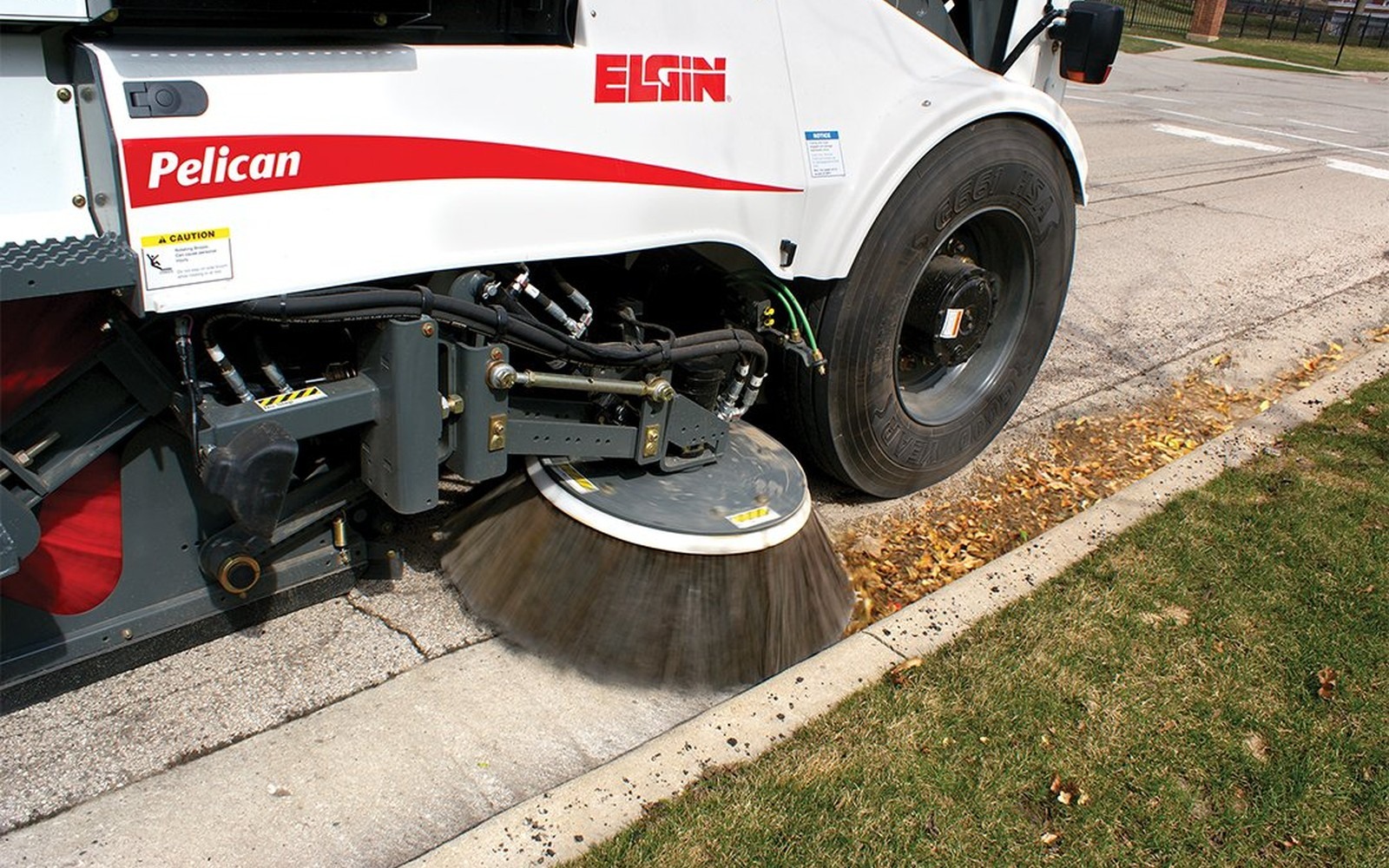
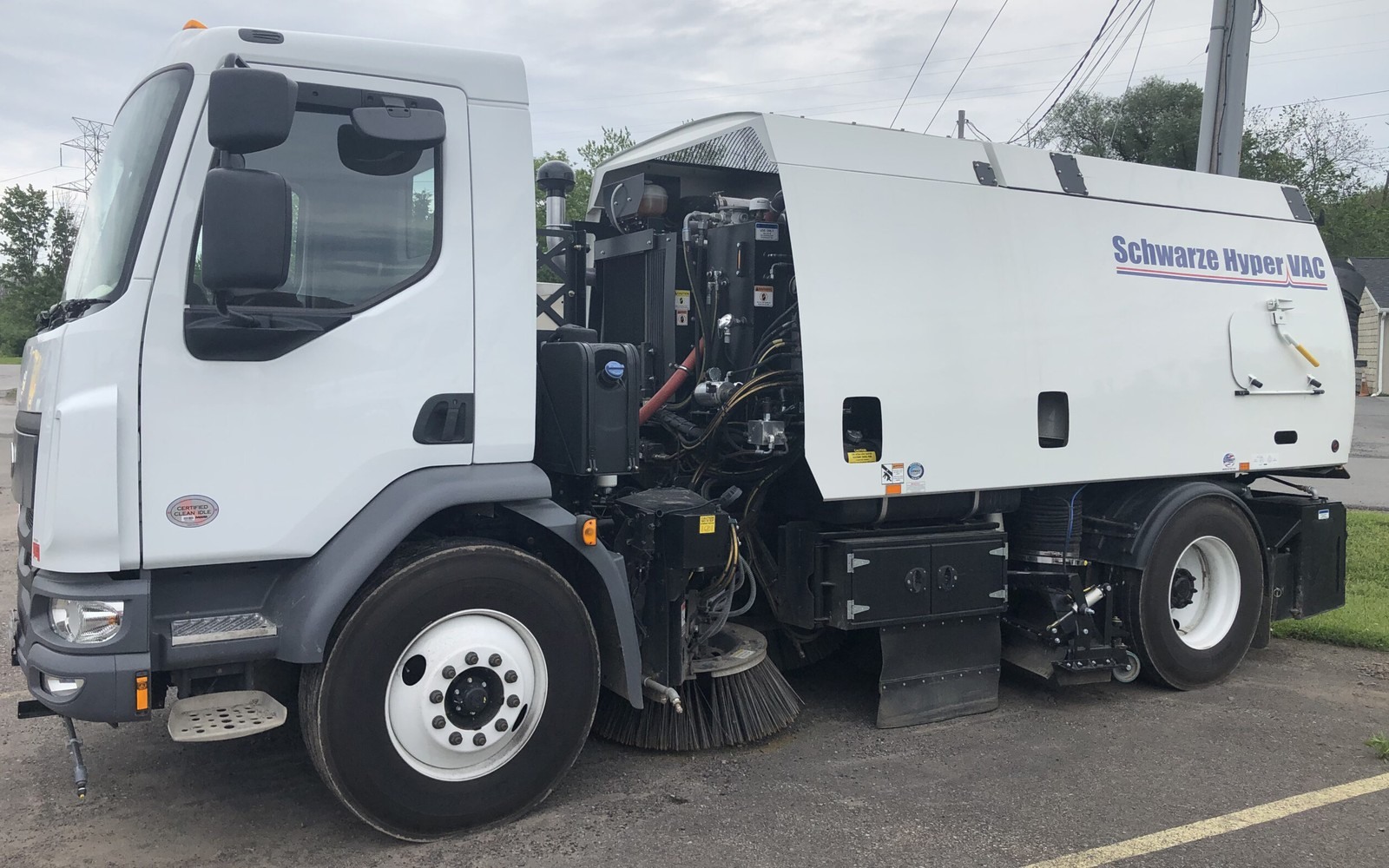
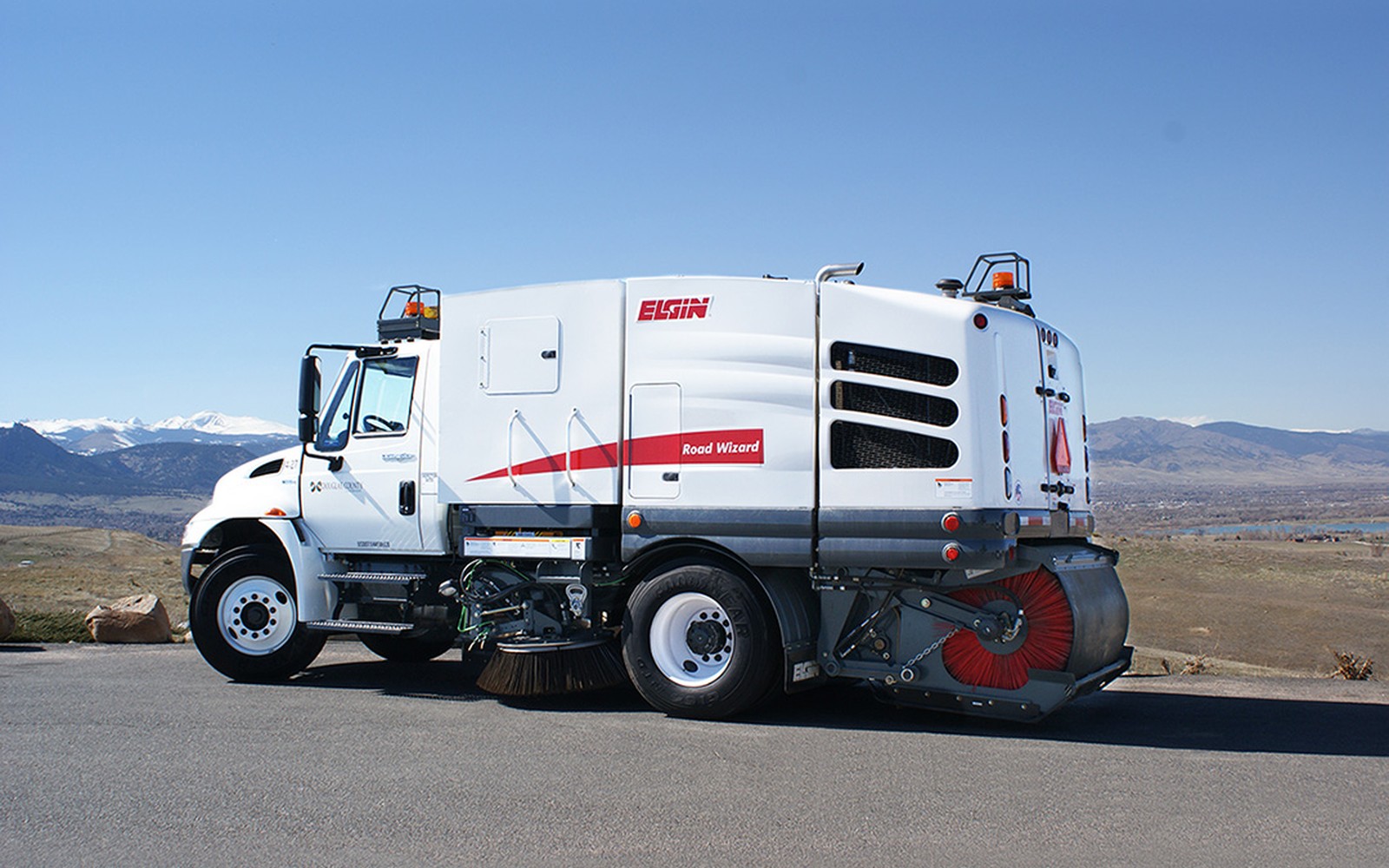
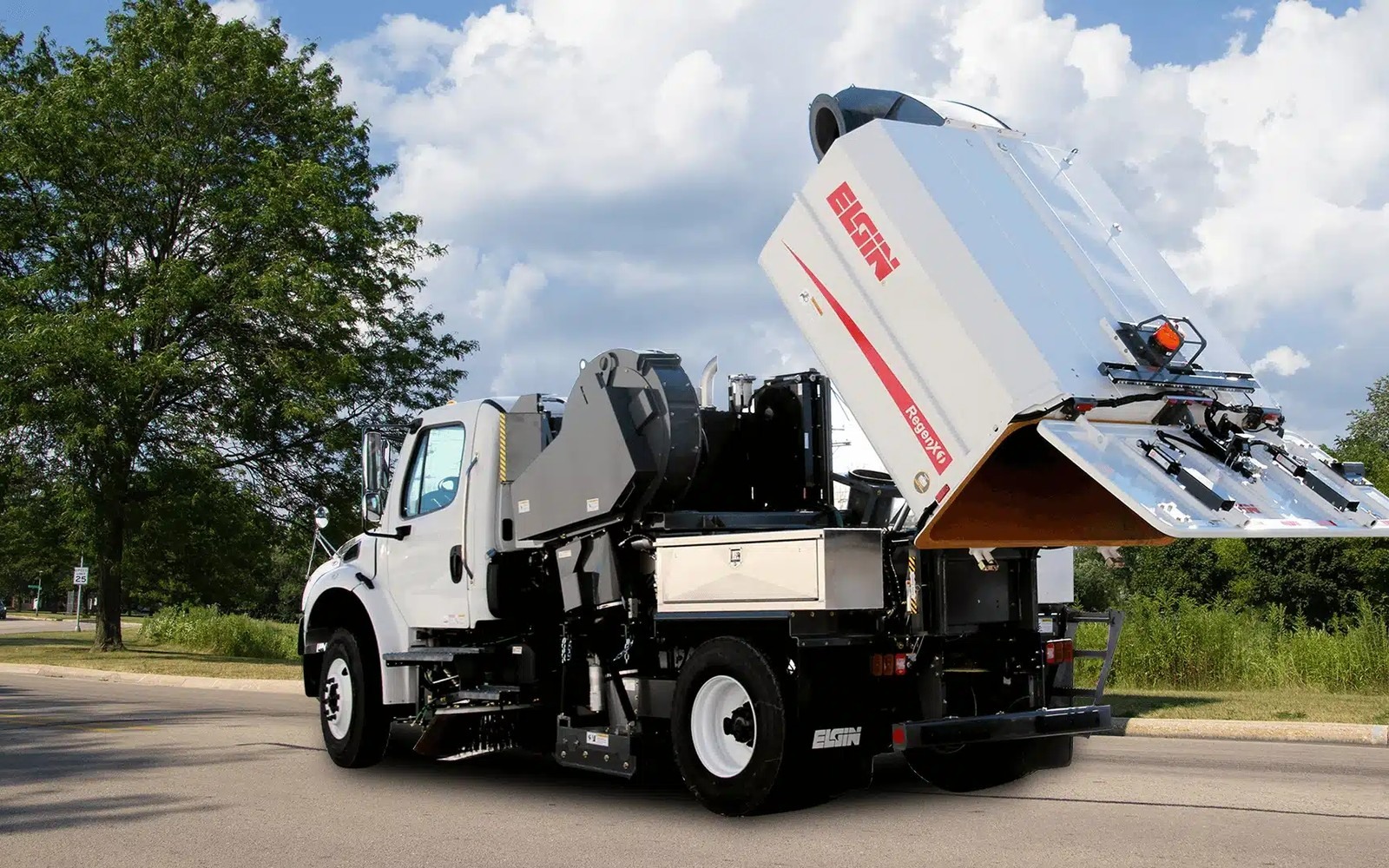
Machines from Elgin, TYMCO, and Schwarze make up a large share of the demo inventory that cycles through dealer lots in any given year. Their residual values are well-known, which helps the underwriting move quickly.
Buying new means full warranty coverage, factory spec, and a clean slate on the hopper and all wear components. The price is highest, but there are no unknowns. If budget allows and the machine is available, new is simple.
A demo sits between new and used in every meaningful way. The price is lower than new, often by ten to twenty percent or more depending on the dealer and the model year. The machine has documented hours and typically carries either the remainder of the original warranty or a dealer-certified warranty. Wear items like gutter brooms and the main broom may have seen light use but are rarely in poor shape on a true demo unit.
Standard used sweepers, especially those coming off municipal fleet auctions or multi-year contractor use, carry more unknowns. Hours can be high, records can be incomplete, and the hopper lining or blast plate may need attention before the machine goes back into service. We finance those too, including used street sweepers and refurbished units, but the underwriting factors in more uncertainty on the condition side.
For operators who want near-new reliability at a better price than list, a demo or low-hour unit is often the practical answer. The payment on a demo sweeper is usually lower than the payment on an equivalent new machine, and the machine performance difference in the first two or three years of service is minimal.
The process runs the same way whether you are buying from a franchised dealer, an independent dealer, or a private seller with a documented low-hour machine. You send us the basics: who you are, the machine you are looking at, and three months of bank statements. We look at the transaction and come back with terms, usually within a day.
Application-only financing is available on deals up to roughly $400,000, which covers most demo sweeper purchases. Beyond that threshold we may ask for business financial statements, but most single-unit or two-unit demo transactions fall below that line.
Purchase financing is the most common structure for demo buys. You own the machine from day one, build equity as the loan pays down, and can take the Section 179 deduction in the year of purchase on eligible equipment. If you want lower monthly exposure, a street sweeper lease on a demo unit can keep the payment down while you test the machine's production numbers in your operation.
Funding typically closes inside one to two weeks from the time we have a complete package. Dealer transactions usually move faster than private-party deals because the title work is cleaner. Either way, you do not need to wait on a bank's committee schedule or an SBA process.
Sweeping contractors growing from two trucks to three, or from three to five, are the most common buyers. Adding capacity is the goal, and a demo unit lets them add a machine with minimal warranty risk at a price that leaves room in the budget for a spare gutter-broom kit and a few months of operating cushion.
Parking-lot sweeping companies run the numbers on demo machines carefully because their routes are predictable and their margins are tight. A machine that performs like new for the first three seasons but costs fifteen percent less than the sticker price improves the fleet economics noticeably.
Municipal and public works departments sometimes buy demo units when budget cycles align with dealer inventory. The machines carry serial numbers and documentation that satisfy procurement requirements, and the purchase price fits within budget allocations that would not stretch to new-machine list pricing.
Operators replacing an end-of-life unit on a tight timeline also lean toward demos. A new order for a specialty sweeper like a regenerative-air sweeper can carry a multi-month wait from the factory. A dealer with a demo unit on the lot solves the timeline problem immediately.
Found the machine? Send us the year, hours, price, and three months of bank statements. We fund demo and low-hour sweepers from $50k, B or C credit included, and we close inside a week or two. The inventory moves fast. The paper does not have to slow you down.
Equipment questions
Clear answers before the equipment file moves to review.
Private-party sales on demo and low-hour units are financeable. The key requirements are a documented title, verifiable hours (service records or hour-meter photos help), and a bill of sale. Dealer transactions are faster to close because the title chain is clean, but private deals work when the documentation is solid.
It depends on the brand and the number of hours at time of purchase. Some manufacturers transfer the remaining original warranty to the next owner; others offer a separate dealer-certified warranty on demo units. Ask the dealer for written warranty documentation before you sign. We can factor a warranted machine more easily than one sold as-is.
We do not have a hard cutoff, but the lower the hours the stronger the deal. Units under 500 hours typically underwrite cleanly. Machines in the 500 to 1,000 hour range are still financeable but may be treated more like standard used sweeper financing depending on the model year and condition.
Soft costs like accessories and initial service items can sometimes be bundled into the transaction up to a point. Talk to us about the total package you are trying to finance and we will let you know what fits within the structure.
challenged credit is something we work with regularly. The machine's value and your business's cash flow matter more to us than a single credit score. Three months of bank statements showing a real operating business go a long way toward getting a deal done even with a bruised score.
Keep exploring
Compare adjacent equipment, model, market, and service-area pages.
Equipment desk
Send the machine, seller, hours, and timing. The equipment desk will organize the next step.