Related financing path

Service Areas
Finance a street sweeper in Detroit, MI. New or used, challenged credit reviewed, statement-based review below roughly $400k, funding paced to the completed file. All major brands financed.
Detroit's road network is not small. Wayne County maintains a substantial system of primary and secondary roads outside the city limits, and the City of Detroit itself operates one of the larger municipal street sweeping programs in the Midwest. If you're in the private sweeping business here, you're competing for parking-lot accounts in the suburbs, post-construction cleanup on the development projects reshaping Midtown and the east side, and potentially municipal subcontracts where the city's own fleet can't cover the full schedule.
We finance sweepers for Detroit-area operators. The floor is $50k. Statement-based review below roughly $400k. Three months of bank statements is the standard documentation. challenged credit both considered. New, used, or certified refurbished units all qualify. Most deals fund in one to two weeks from a complete application. We don't stall, we don't ask for the same documents three times, and we give you a real answer fast.
The automotive manufacturing base in the Detroit metro generates industrial sweeping demand that's different in character from municipal or parking-lot work. Stamping plants, assembly facilities, and the network of Tier 1 and Tier 2 suppliers throughout Wayne, Macomb, and Oakland counties require sweeping services for their yards, access roads, and parking areas. Industrial plant facilities in these environments are often running three shifts, which means sweeping contracts need to be done in specific windows to avoid interfering with production flow.
The suburban development market in Oakland County, including Troy, Auburn Hills, and Bloomfield Hills, and in Macomb County around Sterling Heights and Shelby Township, sustains a robust parking-lot and commercial sweeping market. The retail strip density in those areas generates steady recurring accounts that support consistent equipment payments.
Detroit's industrial waterfront along the Detroit River and Zug Island also creates demand for port-adjacent sweeping. The River Rouge complex and the Ford Rouge Center area have active logistics operations that require regular yard and access-road maintenance. Port-adjacent facilities along the river see heavy truck traffic and the embedded grit that comes with it.
Michigan winters are not gentle on sweeping equipment. The salt brine that MDOT applies to interstates and the rock salt on city streets creates corrosive conditions for hoppers, broom housings, and chassis undersides. Operators who run year-round in Metro Detroit know that stainless steel hopper bodies hold up better than painted steel, and that undercarriage protection is worth the premium on anything you plan to run for more than five years.
After winter, the spring sand and salt cleanup is a major revenue period. Operators who can put a second machine on-line by mid-March capture more of that spring demand. That's a common reason we see financing requests in January and February: operators planning ahead to have a unit available for March contract work. A mechanical broom sweeper is often the choice for heavy spring sand and debris, while a regen-air unit handles the finer particulate and stormwater compliance requirements later in the season.
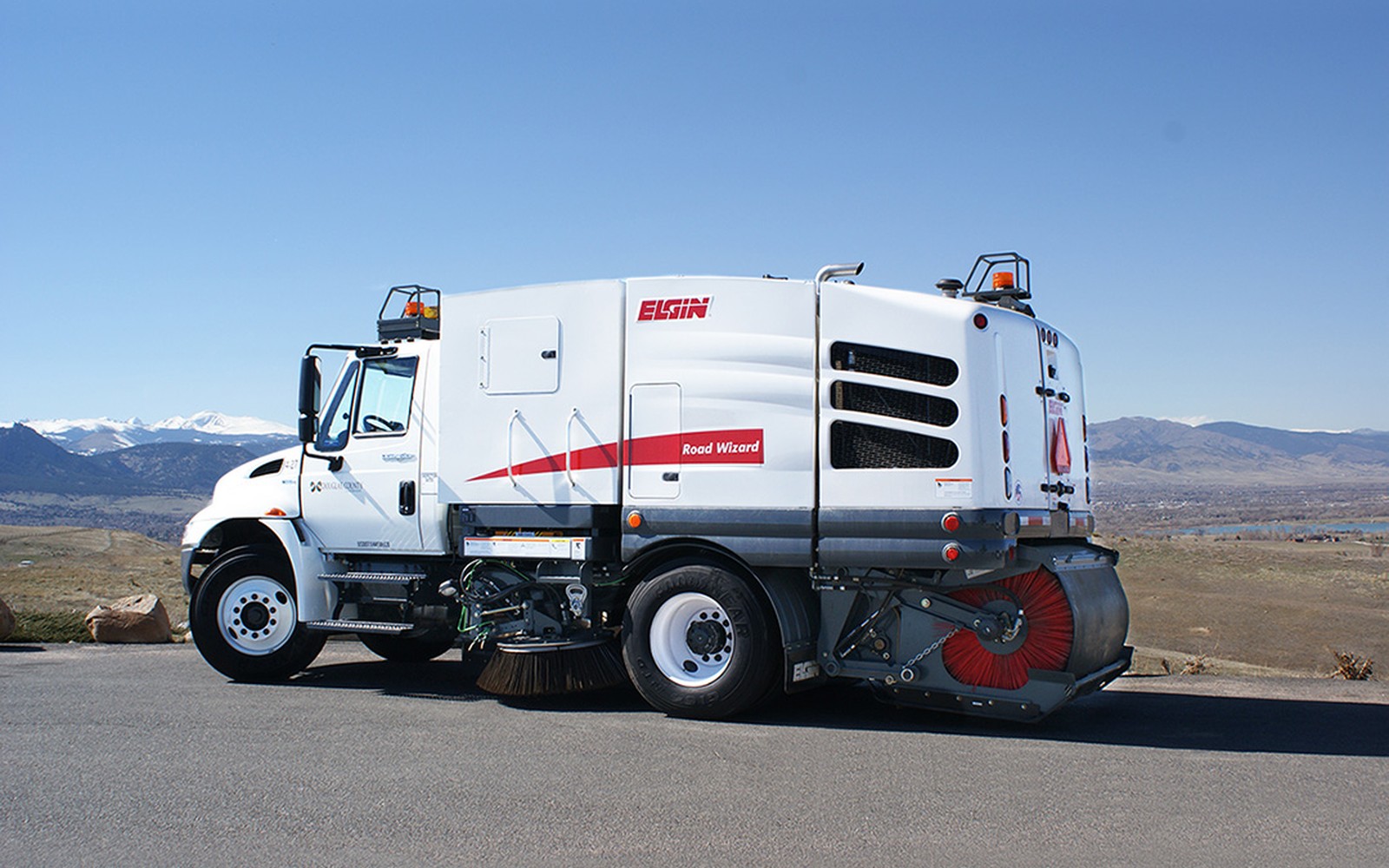
Used equipment from the Chicago and Cleveland markets often flows into Detroit, and the dealer network in Michigan is strong for Elgin, TYMCO, and Schwarze. Those brands have service support within the state, which matters when you need a hydraulic pump or a broom drive repaired without shipping the machine across the country.
The economic cycles that shaped Detroit over the past few decades mean that a lot of operators here have credit histories that reflect those cycles: a rough patch, a restructured business, or a gap in banking activity during a slow period. We've been doing this long enough to know that a 580-610 score from a Detroit contractor with six years of operating history and consistent deposits means something different than the same score from a brand-new company.
We look at the whole picture. Monthly deposits, consistency of revenue, existing debt load, and the equipment's collateral value. A strong machine from a recognizable brand gives us more room on the credit side. A story that makes sense given the region's history gives us more room too. We're not going to pretend that context doesn't exist.
For larger deals, or deals where credit is more complex, we may ask for additional documentation. We'll tell you exactly what we need, not send you a generic checklist and wait. Most challenged credit deals that are fundable close inside three weeks from first contact, even with back-and-forth on documentation.
If you've been turned down before, it's worth applying here. Our equipment team includes institutions that specialize in B and C equipment credit, including startup structures for newer businesses and specific programs for operators coming out of a difficult credit period.
Ten-minute application. Three months of bank statements. Term sheet back in a week. New or used, entry ticket starts near $50,000, B or C credit. Spring cleanup season fills fast for operators with reliable equipment. Get your application in before the competition does.
Equipment questions
Clear answers before the equipment file moves to review.
That depends on your monthly revenue and how much of it comes from the sweeping route. A $120k deal over 60 months runs roughly $2,300-$2,800 per month. If your route generates consistently more than that and you have three months of statements showing it, the deal is reasonable.
Yes. If you own a cab-chassis and want to finance a sweeper body being mounted on it, we can structure that as a body-only deal. The chassis title needs to be clear and the completed unit needs to be inspectable, but this structure is fundable.
Not necessarily. Pandemic-era credit events are reviewed in context. If your bank statements for the last six to twelve months show consistent recovery, many lenders will work with you. The recent trajectory matters as much as the historical low point.
Some industrial contracts and MDEQ-related stormwater work require PM-10 or PM-2.5 certified equipment. If your target contract has those requirements, tell us when you apply so we can make sure the machine you're financing meets the spec.
It can be either. A two-unit simultaneous purchase is often structured as a single deal with one application and one payment. The combined amount needs to stay within the application-only limit if you want to avoid full financial disclosure. If both machines together are under $400k, it typically qualifies for the application-only structure.
Keep exploring
Compare adjacent equipment, model, market, and service-area pages.
Equipment desk
Send the machine, seller, hours, and timing. The equipment desk will organize the next step.