Related financing path

Industries
Finance heavy-duty industrial sweepers for port terminals, container yards, and intermodal facilities. minimum ticket starts near $50,000, challenged credit reviewed, fast decisions, 1-2 week funding.
Container yard gate roads run around the clock. Chassis move in and out in a continuous cycle, tracking aggregate, tire rubber, and dust from staging lanes onto paved circulation areas. In a week without sweeping, a busy terminal accumulates a debris layer that is not just aesthetic. Forklift tires, reach stacker tracks, and rubber-tired yard tractors pick up debris and track it into container inspection lanes, maintenance bays, and onto trailer decks being loaded for dispatch. Sweeping at ports and intermodal yards is an operational requirement for maintaining equipment, controlling tire damage costs, and meeting the environmental compliance requirements that come with operating in a port district.
Port terminals, container depots, intermodal rail yards, and inland port facilities run some of the hardest-use sweeping equipment in any industry. The debris mix is heavy: aggregate from container yard foundations, dust from bulk commodity handling, tire wire from worn chassis tires, packaging materials from stripped containers, and spilled cargo material. The machines working these yards need large hoppers, robust broom systems, and structures that handle the abuse of daily heavy use on aggregate-surfaced roads.
We finance port and intermodal sweeping equipment for private terminal operators, logistics companies, and rail-port joint ventures. Both commercial financing and, where applicable, municipal lease-purchase for publicly owned port authorities are available. Deals from $50,000 up, new and used, challenged credit considered.
Port and intermodal sweeping demands equipment that standard municipal street sweepers are not designed for. Hopper sizes needed to cover a large container yard without constant dump cycles are larger than standard municipal units. Main broom systems need to handle aggregate debris, including stone that damages lighter-duty broom assemblies. And the machines need to operate on both paved and aggregate-surfaced areas within the same facility, creating a different duty cycle than on-road sweeping.
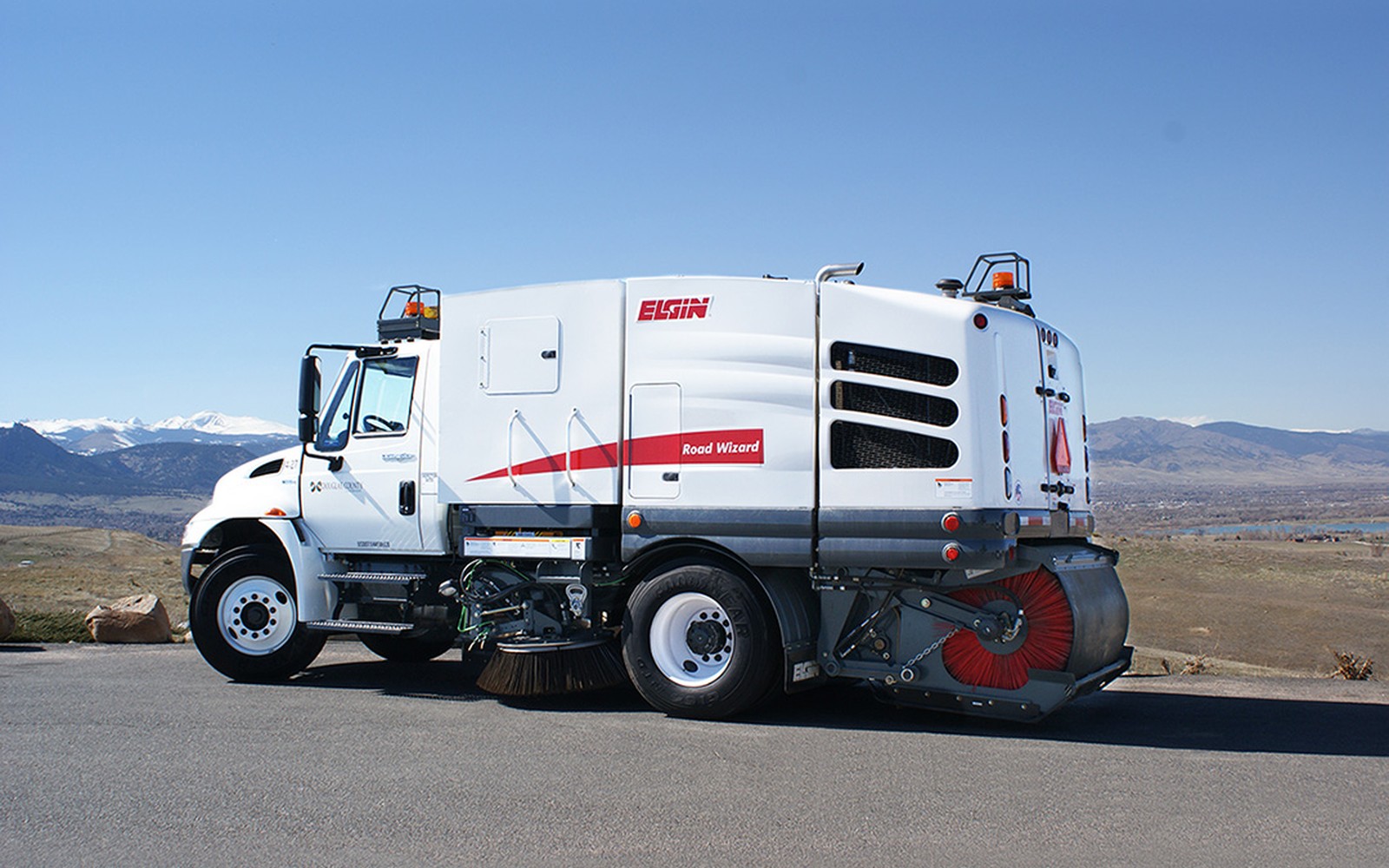
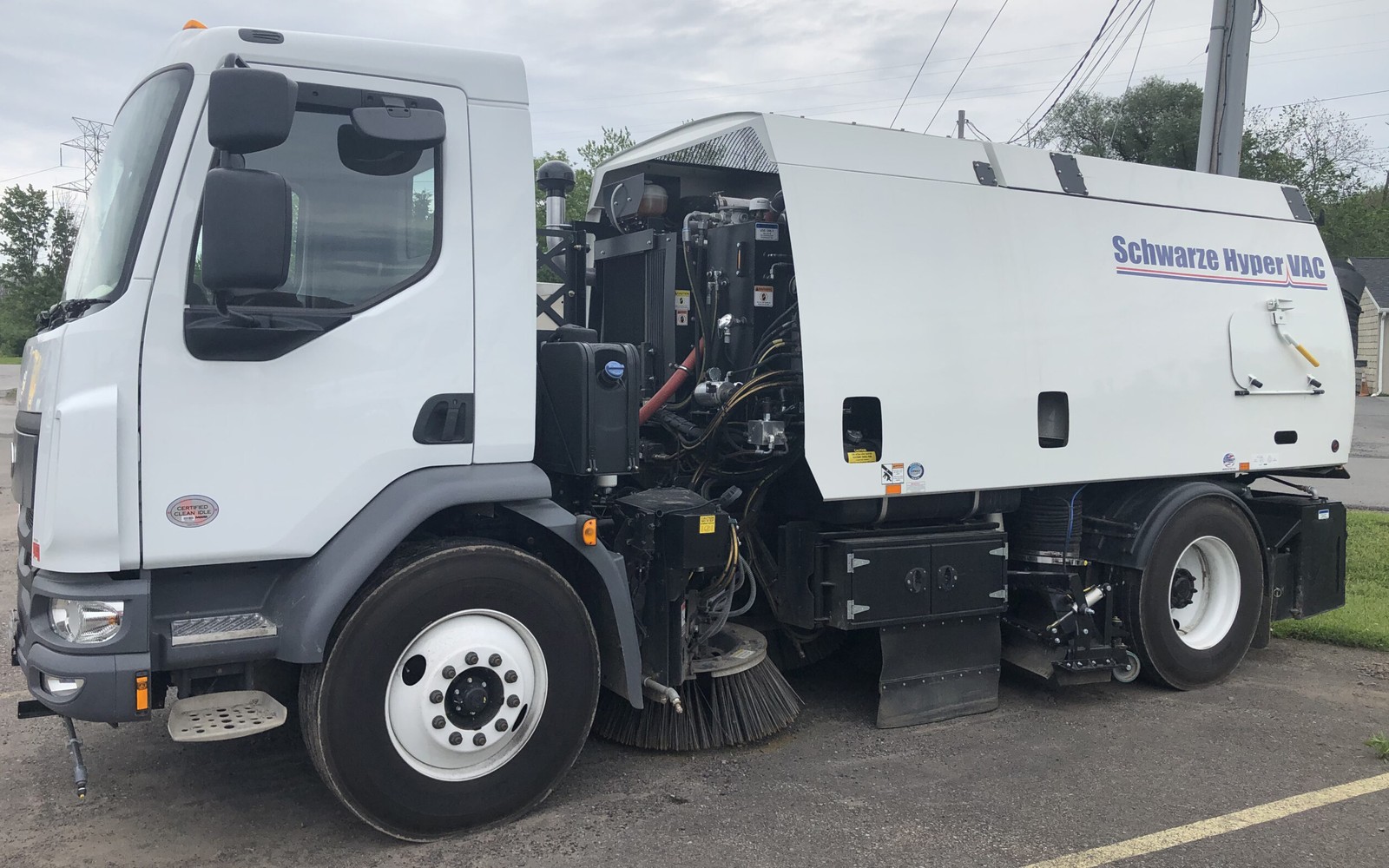
Heavy-duty industrial sweepers purpose-built for terminal work are the primary equipment class for larger port operations. These machines feature oversized hoppers, robust chassis construction, and high-torque broom systems that handle the full range of port debris without the maintenance frequency issues that lighter-duty machines develop in this environment.
For container inspection lanes and maintenance bay areas with hard surfaces and lighter debris, a standard mechanical broom sweeper handles the work effectively. Some port facilities run a combination of a large industrial unit for yard circulation roads and a medium-duty street sweeper for paved lane and dock areas, sizing each machine to its specific application.
Facilities that operate near air-quality sensitive zones, including many port districts in California and other coastal states with stringent air regulations, may need PM-10 certified sweepers to meet their NPDES permit and air district requirements. Port districts in Southern California operate under some of the most stringent diesel emissions and dust control requirements in the country, which affects both the machine specifications and the fleet replacement timeline.
Port facilities face environmental compliance requirements from multiple regulatory directions simultaneously. The EPA's NPDES Multi-Sector General Permit for industrial stormwater discharges applies to most port and intermodal facility types. Regular sweeping of paved areas is a specified Best Management Practice for reducing pollutant loads in stormwater runoff from these sites, and documentation of sweeping frequency is often required as part of the Stormwater Pollution Prevention Plan.
Air quality is the second major compliance driver. Port districts in non-attainment areas for PM-10 and PM-2.5 particulate matter are under pressure from state and local air districts to reduce fugitive dust emissions from unpaved yard surfaces and from cargo handling operations. Regular sweeping with PM-10 certified equipment is one of the most direct and documented ways to reduce fugitive dust, and air district compliance agreements for large port operators sometimes include sweeping equipment requirements and frequency standards.
The combination of stormwater and air quality compliance requirements creates a situation where port operators are effectively required to run sweeping programs, and the equipment to run those programs needs to be funded. Whether that funding comes through a long-term municipal authority structure or a commercial equipment loan, the compliance obligation makes the sweeping investment non-discretionary.
Private port terminal operators and logistics companies use standard commercial equipment financing. Three months of bank statements, the application, and the equipment purchase agreement or vendor quote are the standard documentation package. Application-only financing up to $400,000 is available for qualified applicants without tax returns. For larger deals, more complete documentation may be required, but we structure around the specific operation rather than applying a template.
Port authorities that are organized as government entities have access to tax-exempt financing through municipal lease-purchase structures. The same non-appropriation protections and lower effective interest rates that benefit city and county governments apply to public port authorities. For authorities that have issued general obligation bonds in the past, equipment financing through a lease-purchase is a simpler administrative process than a bond issuance and appropriate for the scale of an equipment acquisition.
If a terminal operator has paid-off sweeping equipment with equity, a sale-leaseback can free that equity for other capital needs (terminal improvements, fleet expansion, regulatory compliance capital) while the operator continues to use the equipment. Port operations are capital-intensive, and unlocking equipment equity without taking the asset out of service is a useful tool.
For large fleet replacements on a defined schedule, structured financing that rolls multiple units into a single agreement with staggered funding tranches is available. Talk to us about fleet programs if you are replacing more than three or four units on a planned timeline.
Port sweeping equipment is not optional. Finance it through a desk that understands industrial and terminal applications. New or used, $50,000 and up, municipal and commercial structures available. Call us to discuss the asset and the deal.
Equipment questions
Clear answers before the equipment file moves to review.
Yes. Sweepers designed for industrial and terminal use can operate on aggregate-surfaced yards as well as paved surfaces, and we finance them for that application. The equipment spec for aggregate-surface sweeping differs from on-road street sweeping: you need robust main broom systems and hopper designs that handle heavier material without jamming. Tell us the surface type and the debris profile and we can help identify equipment that fits the application.
Port authorities organized as government entities or quasi-governmental bodies are generally eligible for municipal lease-purchase financing. The specific eligibility depends on how the authority is chartered under state law. We work with municipal finance counsel to confirm eligibility and structure the agreement to meet the authority's specific legal requirements. Most port authorities we have worked with have had access to this structure.
Yes. PM-10 certified sweepers and units meeting California Air Resources Board Tier 4 Final diesel emission standards are financeable through us. The compliance specification on the equipment is actually positive from a financing standpoint because it demonstrates the equipment meets current regulatory requirements, which supports its useful life and residual value assumptions.
Yes. Equipment financing is against the equipment and the business, not the real property. A 3PL or terminal operator with a long-term lease at a port facility finances equipment the same way a property owner does. The term of your facility lease relative to the proposed financing term may factor into the structure, but not having fee ownership of the terminal is not a disqualifier.
Not directly. Equipment financing underwriting looks at the business's financial health, revenue, and credit profile. Union agreements affect labor cost structure, which shows up in the overall financial picture but does not change how we evaluate the equipment deal itself. Labor agreements can actually be a positive indicator of a stable, established operation with predictable cost structures.
Keep exploring
Compare adjacent equipment, model, market, and service-area pages.
Equipment desk
Send the machine, seller, hours, and timing. The equipment desk will organize the next step.