Related financing path

Models
Finance an Elgin MegaWind high-capacity regenerative-air sweeper. New or used, challenged credit reviewed, statement-based review below roughly $400k, funding paced to the completed file.
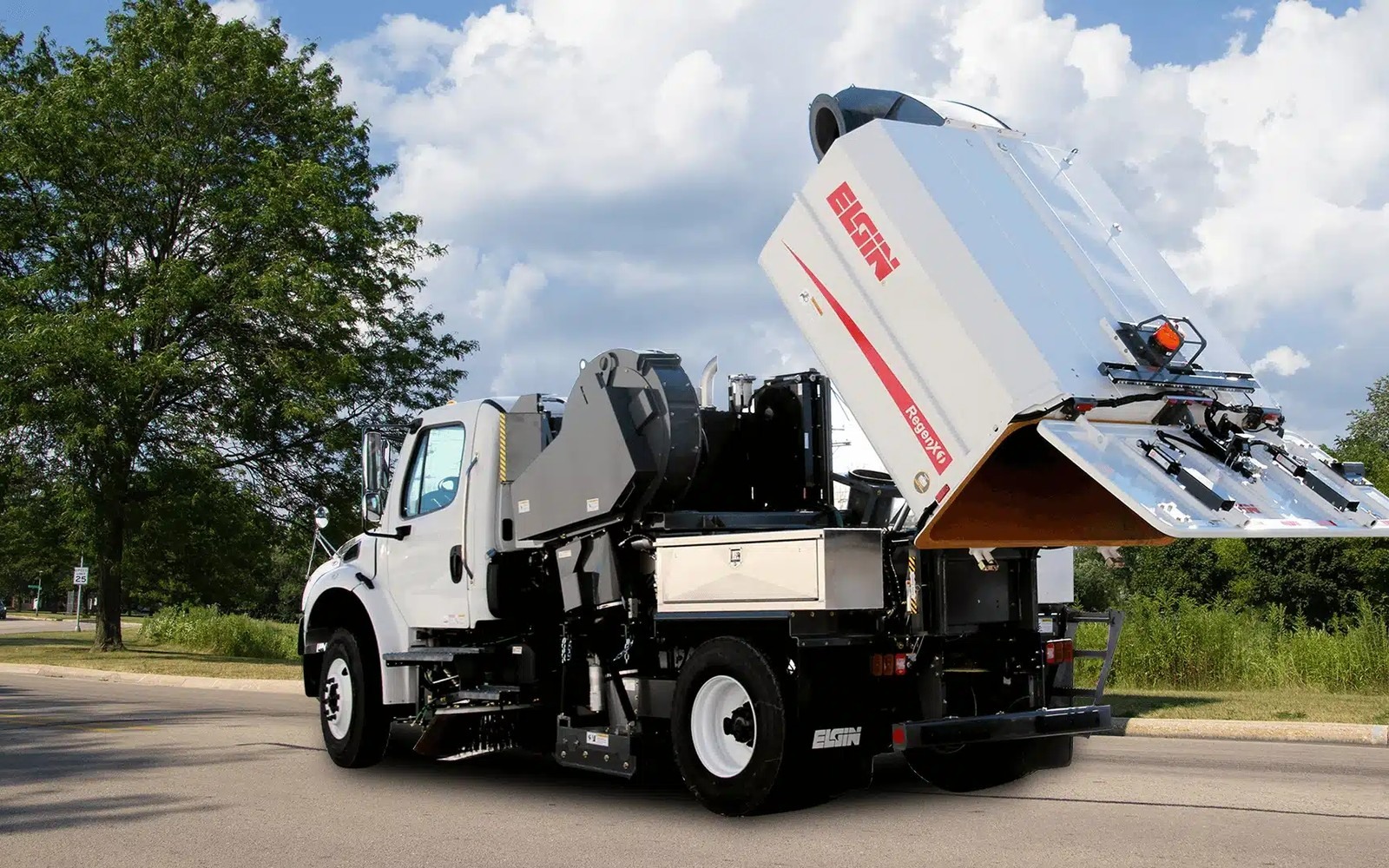
Bigger fan, bigger hopper, bigger route capacity. The Elgin MegaWind is the high-capacity end of Elgin's regenerative-air lineup, built for municipal operators and large private sweeping contractors who cannot afford to run a machine that runs out of hopper space halfway through an arterial segment. Where the Crosswind is a workhorse, the MegaWind is the machine you put on your heaviest routes, your highest-leaf-load neighborhoods in October, your post-storm cleanup corridors.
The MegaWind runs on Elgin's dedicated sweeper chassis and uses a fan system scaled up from the Crosswind to move a larger volume of air per minute. That higher air volume translates to better pickup performance on heavier debris loads without a proportional increase in passes required per block. The hopper on the MegaWind runs approximately five cubic yards, which is a meaningful step up from the four-yard Crosswind on routes where hopper size is the operational constraint.
Pricing on a new MegaWind sits toward the higher end of the Elgin lineup, generally north of $250,000. That still falls inside application-only territory for most deals. We finance MegaWinds from $50,000, and the majority of buyers are municipalities or established sweeping contractors with existing contracts that support the payment. We cover all Elgin models, and the MegaWind is one of the more common large-platform deals we close.
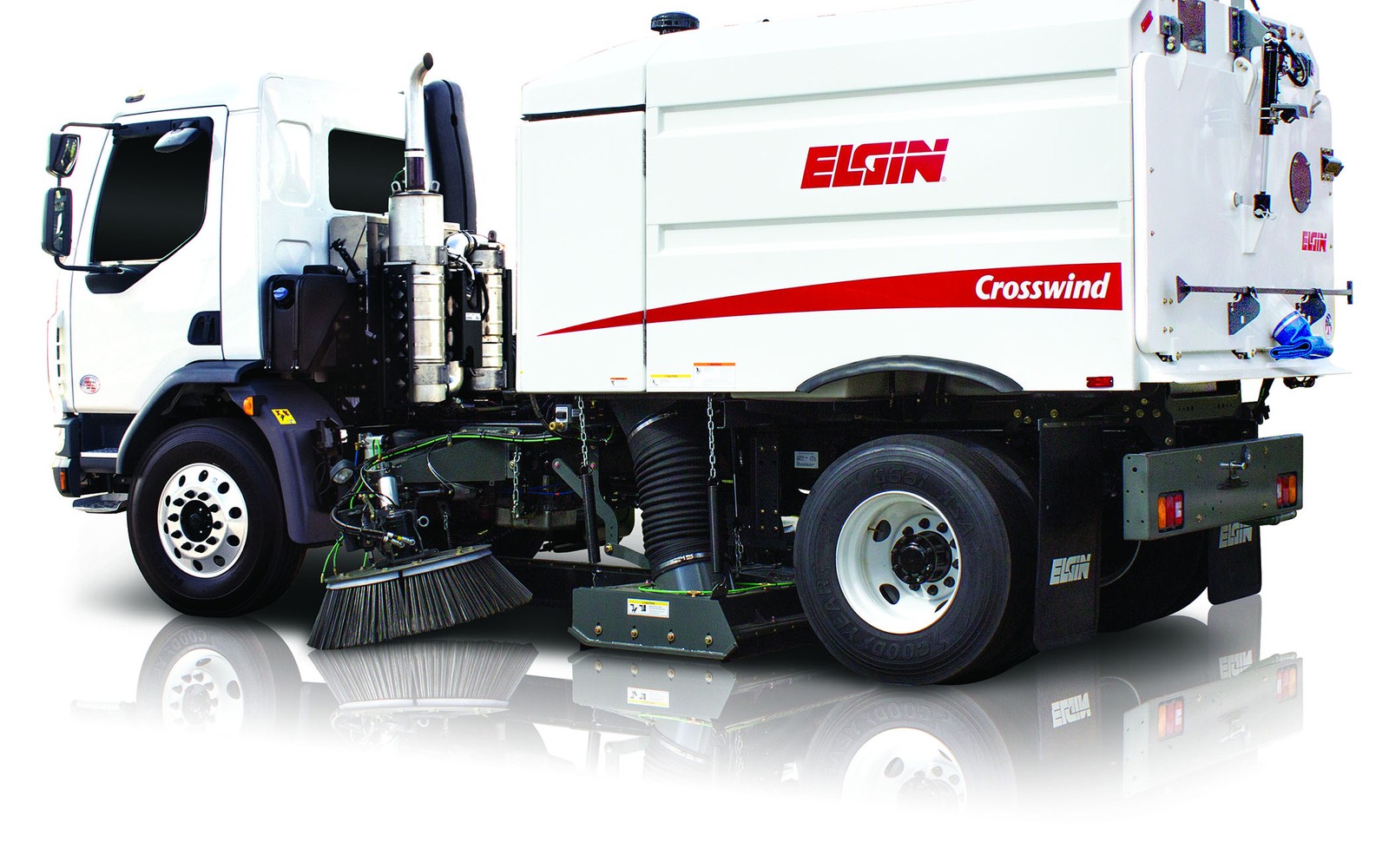
The MegaWind and the Crosswind are both Elgin regen-air machines, but they are not the same machine at different price points. The MegaWind is designed for routes and contracts where higher debris loads and longer service intervals between dumps are the real operational requirement. A sweeping contractor with a long-term municipal contract covering high-canopy residential corridors will push the Crosswind's hopper to capacity faster than the route timing allows. The MegaWind solves that problem with additional hopper volume and fan capacity.
Municipal street maintenance departments that run split fleets, mechanical broom machines on light-load arterials and regen-air on compliance routes, typically put the MegaWind on their most demanding segments. Downtown corridors with heavy foot traffic debris loads, park-adjacent streets in fall, and post-event sweeping contracts all generate the kind of volume that benefits from the larger platform.
For operators who also look at high-dump sweeper configurations, Elgin has offered high-dump variants that allow dumping into elevated containers without requiring the machine to back up to a low wall or dock. That feature matters on routes where dump logistics are constrained by the available site infrastructure.
The process at our desk starts with a credit application and three months of bank statements. For municipal entities, we route the deal through a municipal lease-purchase structure, which uses tax-exempt interest rates and fits within public procurement requirements. For private sweeping contractors, we run it through our commercial equipment team.
Most MegaWind purchases land landing between $250k and $340k depending on configuration and condition. New machines from a dealer, used machines from fleet dispersals, auction units, all go through the same application-only process at that ticket size. We do not require tax returns or full financial statements on deals under approximately $400,000.
Terms on a MegaWind purchase typically run five to seven years. A seven-year term keeps the payment lower on a high-ticket new machine, while a five-year term builds equity faster and reduces total interest paid. We show both options in the quote so you can decide based on your cash flow situation rather than guessing.
Refinancing an existing MegaWind is also common among operators who bought at a high rate a few years ago. If market conditions or your own credit profile have improved, a refinance can reduce the monthly payment and free up operating cash. We run refinance quotes alongside new purchase quotes so you can compare the two decisions with real numbers.
If you are building out a full fleet and the MegaWind handles your heavy routes, a smaller platform covers your parking lot and light-commercial accounts without burning MegaWind-level fuel on a parking strip. The TYMCO 600 is a comparable large-format regen-air machine that some mixed-fleet operators pair with Elgin mechanical equipment. We finance both.
Road construction companies that add a MegaWind for post-milling cleanup often find the machine's hopper capacity allows a full arterial cleanup pass before the first dump cycle. That efficiency advantage adds up across a construction season with dozens of paving jobs.
Operators who have a paid-off MegaWind in the fleet and are considering expansion should look at the sale-leaseback option. The machine converts to immediate working capital while staying on your route. That capital can fund a second sweeper, cover contract startup costs, or simply strengthen the operating account heading into a slow season.
Large platform, big hopper, high routes. We fund the MegaWind the same way we fund every sweeper: application, bank statements, decision fast. Municipal or commercial, new or used, B or C credit, we close it inside two weeks. Compare the Elgin Crosswind if you want the same regen-air technology at a lower price point for lighter-duty routes.
Equipment questions
Clear answers before the equipment file moves to review.
The MegaWind's larger fan system uses more fuel than the Crosswind, but the higher hopper capacity and greater air volume per pass can reduce the total passes required to clean a given segment. On heavy-load routes the net fuel cost per clean curb-mile can be comparable. On light-load routes the Crosswind is more efficient. Route analysis before purchase is worth doing.
One year in business is on the lower end for a machine in this price range, but it is not automatic disqualification. A strong bank statement showing consistent revenue, a solid contract in hand, and a reasonable down payment can get a newer business across the finish line. We review the full file before giving a verdict.
Depends on cash flow priority. A seven-year term lowers the monthly payment and keeps operating cash available for fuel, maintenance, and broom consumables. A five-year term increases equity build speed and reduces total interest paid over the life of the loan. Most operators in growth mode prefer the seven-year term and refinance earlier if cash flow improves.
Yes. State DOT subcontractors and prime contractors finance equipment through our program the same way any commercial sweeping operator does. If you hold a state maintenance contract that supports the payment, that contract can be a positive factor in underwriting.
Multi-unit transactions are possible. We structure them as blanket agreements or as parallel individual files depending on which approach the lender pool prefers for your credit profile. In some cases a multi-unit package improves the terms versus separate single-unit deals.
Keep exploring
Compare adjacent equipment, model, market, and service-area pages.
Equipment desk
Send the machine, seller, hours, and timing. The equipment desk will organize the next step.