Related financing path

Sweeper Types
Finance high-dump sweepers for high-production municipal routes where dump-truck transfer is needed. entry ticket starts near $50,000, challenged credit reviewed, funding paced to the completed file.
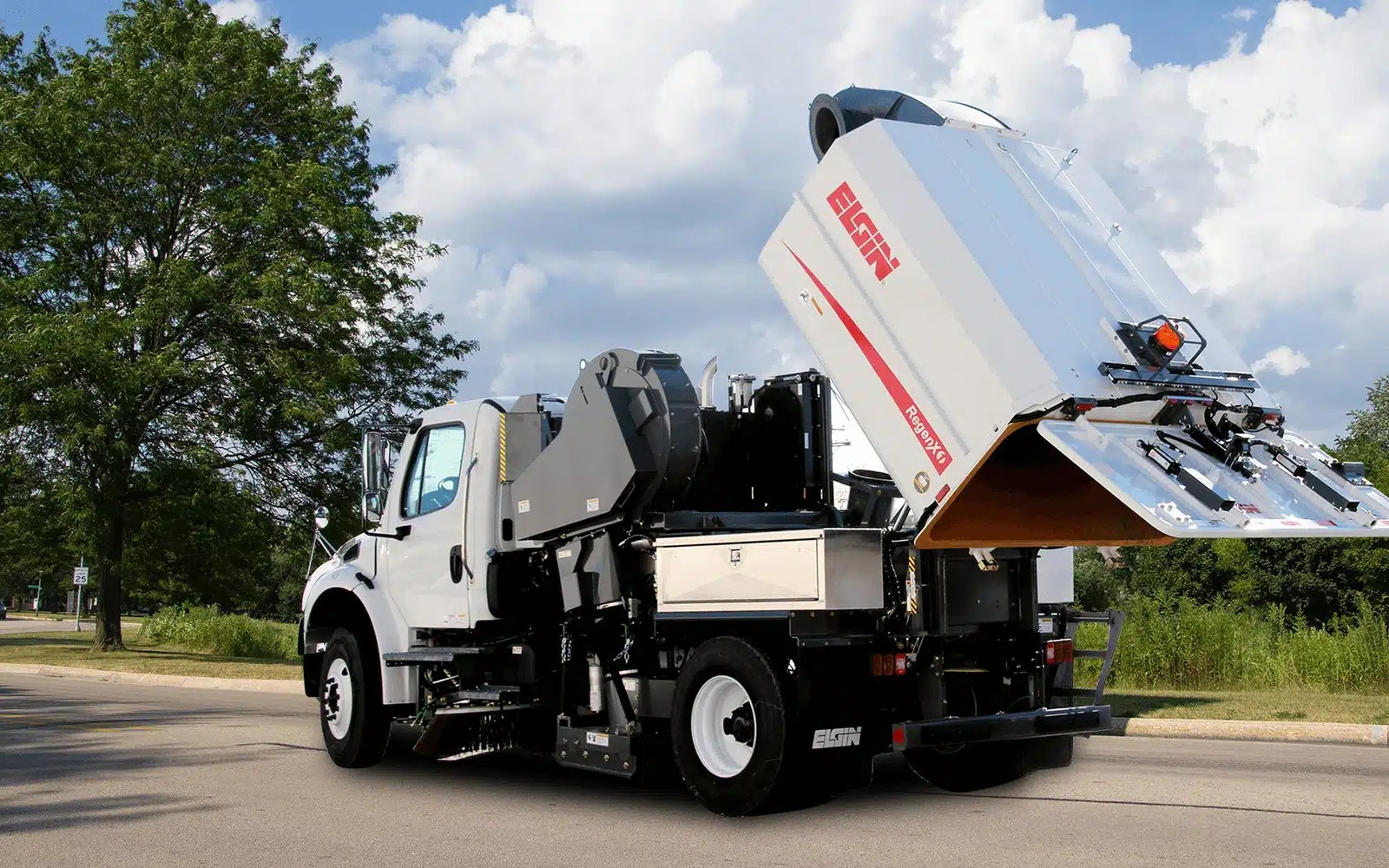
A standard sweeper dumps low: the hopper tilts and the debris falls out at ground level, which means the sweeper has to drive to a dump site, dump, and return to the route. That cycle is lost time. A high-dump sweeper eliminates that cycle by raising the hopper high enough to discharge directly into a waiting transfer truck or dumpster, which stays parked while the sweeper keeps sweeping. You do not lose the route while you dump. The dump truck or transfer vehicle carries the load away, and the sweeper never stops turning.
High-dump configurations are a feature, not a separate machine class, meaning a high-dump sweeper is otherwise a standard mechanical or vacuum sweeper with an elevated dump mechanism built into the hopper design. The TYMCO 500x is the best-known dedicated high-side-dump sweeper in North American municipal service, designed specifically for the high-production urban sweeping market where keeping the sweeper on the route is a productivity priority. Stewart-Amos also builds high-dump configured units, and other manufacturers offer elevated dump options on their standard hopper designs.
New high-dump sweepers typically price landing between $230k and $330k due to the additional hopper lift mechanism and structural requirements. Used units with good service histories come in around $100,000 to $170,000 on the secondary market. We finance high-dump sweepers from $50,000, new or used, B or C credit considered. Statement-based review below roughly $400,000. Funded in about one to two weeks. If route productivity is the argument for buying a high-dump unit, do not let a slow financing process eat into the production gains before the machine is even on the route.
A high-dump hopper elevates the debris body on a hydraulic lift mechanism, raising the discharge point to heights ranging from 8 to 14 feet depending on design, sufficient to clear the rail of a standard dump truck body or a large rolloff container. The debris is then discharged by opening the rear gate of the elevated hopper, dropping the load into the transfer vehicle.
The productivity case for high-dump is clearest on city routes where the dump facility is far from the work zone. If a sweeper is running a residential route that is 30 minutes from the nearest dump site, every dump cycle costs one hour of round-trip time plus the actual dump time. A high-dump sweeper working with a transfer truck parked at the route perimeter can dump in five minutes without leaving the block. Over a shift, the difference in productive sweep time is significant, particularly on overnight routes where traffic is low and the sweeper could otherwise run continuously.
The additional maintenance consideration on high-dump units is the hydraulic lift system. Cylinders, seals, and the structural frame of the elevated hopper require inspection on a regular schedule. Lift mechanism failures are not common but are more consequential than a gutter broom arm failure, since a jammed elevated hopper can take the machine out of service entirely. Operators who buy high-dump units need a maintenance program that specifically covers the lift system. This is a relevant fact for financing: used high-dump machines should have their lift history documented the same as the broom system and chassis. The TYMCO 500x high-side-dump unit specifically has good aftermarket service network coverage in most metros, which supports maintenance access.
Large city street departments running high-production sweeping programs are the primary market. A city that sweeps its downtown business district nightly and its residential streets on a weekly schedule, and wants to maximize productive sweep hours rather than dump-run hours, is the natural high-dump buyer. The economics are clearest when the city also operates a dedicated fleet of transfer dump trucks that travel with the sweeper teams. Street maintenance departments that have made the investment in tandem sweeper-and-transfer-truck operations report measurably higher linear feet swept per shift compared to sweepers that self-haul to dump.
Private sweeping contractors who have won large municipal subcontracts that are paid per linear mile swept or per shift hour have a financial incentive to maximize sweeper productive time. A high-dump unit paired with a transfer truck, sometimes called a wing-and-a-prayer setup by route veterans, keeps the sweeper moving and the billing hours accumulating. Sweeping contractors at this scale are typically buying their third or fourth machine, not their first, so they have established cash flow that supports financing at the price point high-dump units command.
High-dump sweepers carry a price premium over standard-dump configurations. That premium is earned back in route productivity, but it also means the financing amount is higher and the monthly payment is higher. For contractors who are buying their first high-dump unit after running standard-dump machines for years, the payment step-up needs to be covered by the productivity gains. Run the math on dump-run labor and fuel cost before committing to the higher payment, and make sure the numbers justify the upgrade.
For contractors or fleets that already own a high-dump unit, sale-leaseback financing can free up the equity in the machine. High-dump sweepers hold their value well in the secondary market because the buyer pool is relatively narrow and demand from production-focused fleets keeps prices from falling as fast as standard units. If you own a high-dump sweeper worth $150,000 with no debt against it, that is $150,000 of working capital locked in the machine. A leaseback puts that capital to work while the machine stays on the route.
A cash-out refinance works the same way if you have an existing loan on the machine with equity above the outstanding balance. We pull the equity out as cash and restructure the debt at the current market value. Used effectively, this strategy funds a second machine, a fleet upgrade, or contract startup costs without touching the operating accounts.
High-dump sweepers are a serious investment in route productivity. We finance them at every price point and every credit level that makes sense. Send us the machine details and three months of bank statements. We will get back to you fast and we know what these machines are worth as collateral. No runaround.
Equipment questions
Clear answers before the equipment file moves to review.
Yes, if both are being purchased at the same time, we can often structure them as a single transaction or as two parallel transactions with coordinated funding. A transfer truck is a standard commercial vehicle and financing it alongside a sweeper is not unusual. Tell us both assets and we will figure out the cleanest structure.
Yes, $310,000 falls under our $400,000 application-only threshold. Three months of bank statements and the application is the document requirement. No audited financials needed. Credit decision in one business day on a complete package.
Yes. Structural repairs to the hopper or lift frame are a significant valuation issue on a high-dump sweeper. We would need documentation of the repair method, and the machine's appraised collateral value would be reduced from standard market price. We may still be able to finance it depending on the repair quality and the asking price relative to adjusted value. An independent equipment inspection is worth paying for before you buy.
Yes. Municipal entities qualify for tax-exempt lease-purchase financing on high-dump sweepers the same as on standard sweeper equipment. The high price point on these machines actually makes the interest savings from tax-exempt financing more significant, so it is worth the documentation effort.
Keep exploring
Compare adjacent equipment, model, market, and service-area pages.
Equipment desk
Send the machine, seller, hours, and timing. The equipment desk will organize the next step.