Related financing path

Industries
Finance construction-phase sweepers for site cleanup, track-out control, and haul-road dust management. minimum ticket starts near $50,000, challenged credit reviewed, funding paced to the completed file.
Dirt hitting public pavement from a construction exit is a compliance problem. The inspector notices, the GC gets a call, and the subcontractor responsible for track-out control gets the next call. Track-out violations are not theoretical, they are real stops-and-citations, and avoiding them requires equipment on-site that can sweep the apron, the egress lane, and the adjacent public roadway before the inspectors make their rounds. A construction site sweeper is not a nice-to-have on a major job. It is a permit requirement on most commercial projects in regulated jurisdictions.
Construction cleanup contractors who specialize in this work run a different business model than route sweepers. The revenue is project-based: a GC calls, you mobilize, you sweep the site and the apron for the duration of the job, you demobilize. The equipment gets worked hard on mixed debris, gravel fines, concrete splatter, and aggregate that a parking-lot unit would never see. The machines need to be robust, and because projects end, you need to be positioned to move quickly from one site to the next. Equipment that is reliable and available is how you build the referral base that fills the schedule.
Financing construction cleanup equipment means accounting for this project-based revenue pattern. A single GC relationship on a year-long commercial project might generate enough revenue to service the payment on one unit. Two or three GC relationships spread across concurrent projects justifies a fleet investment. We structure around what the operation actually looks like, not around a template that assumes steady monthly revenue.
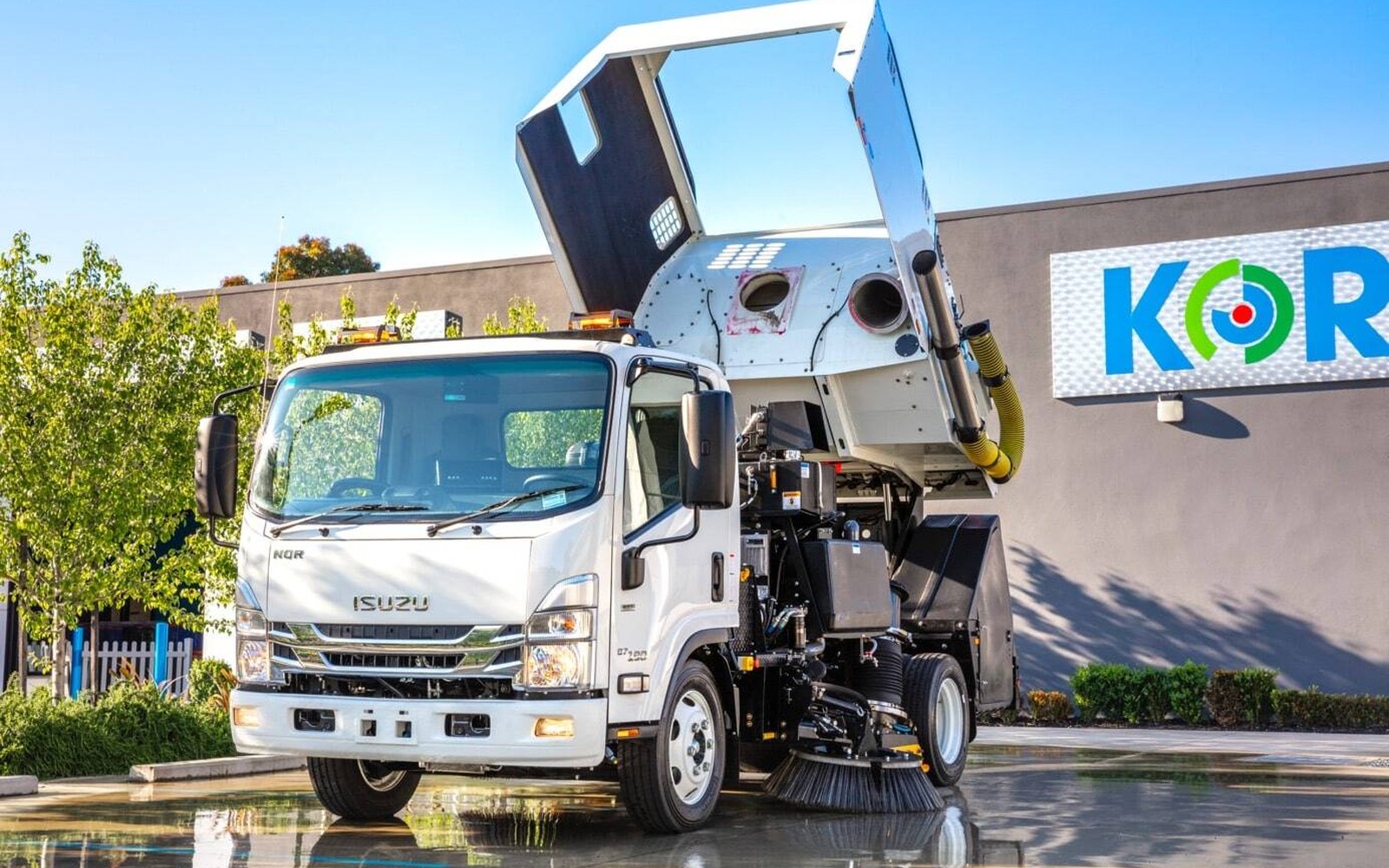
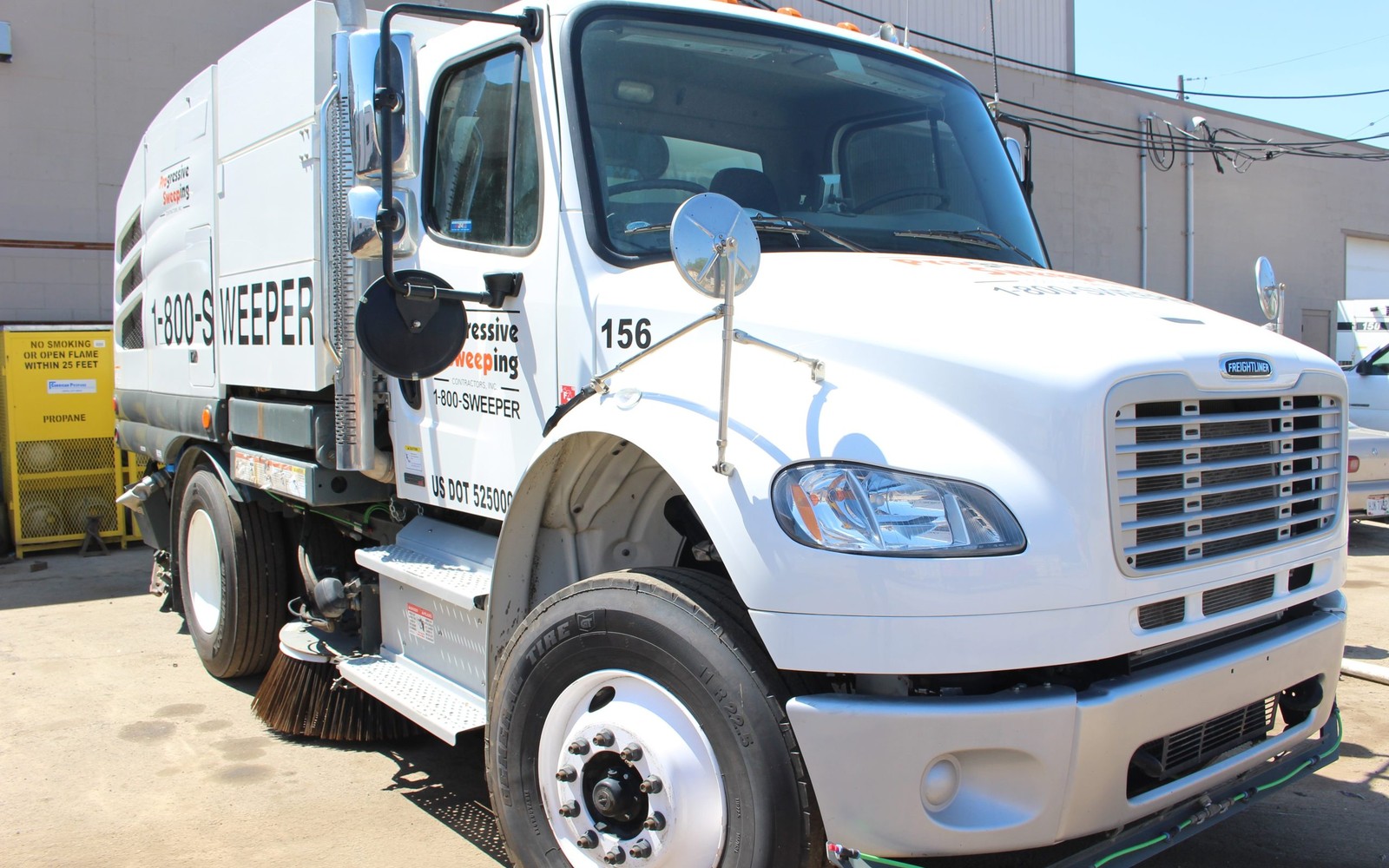
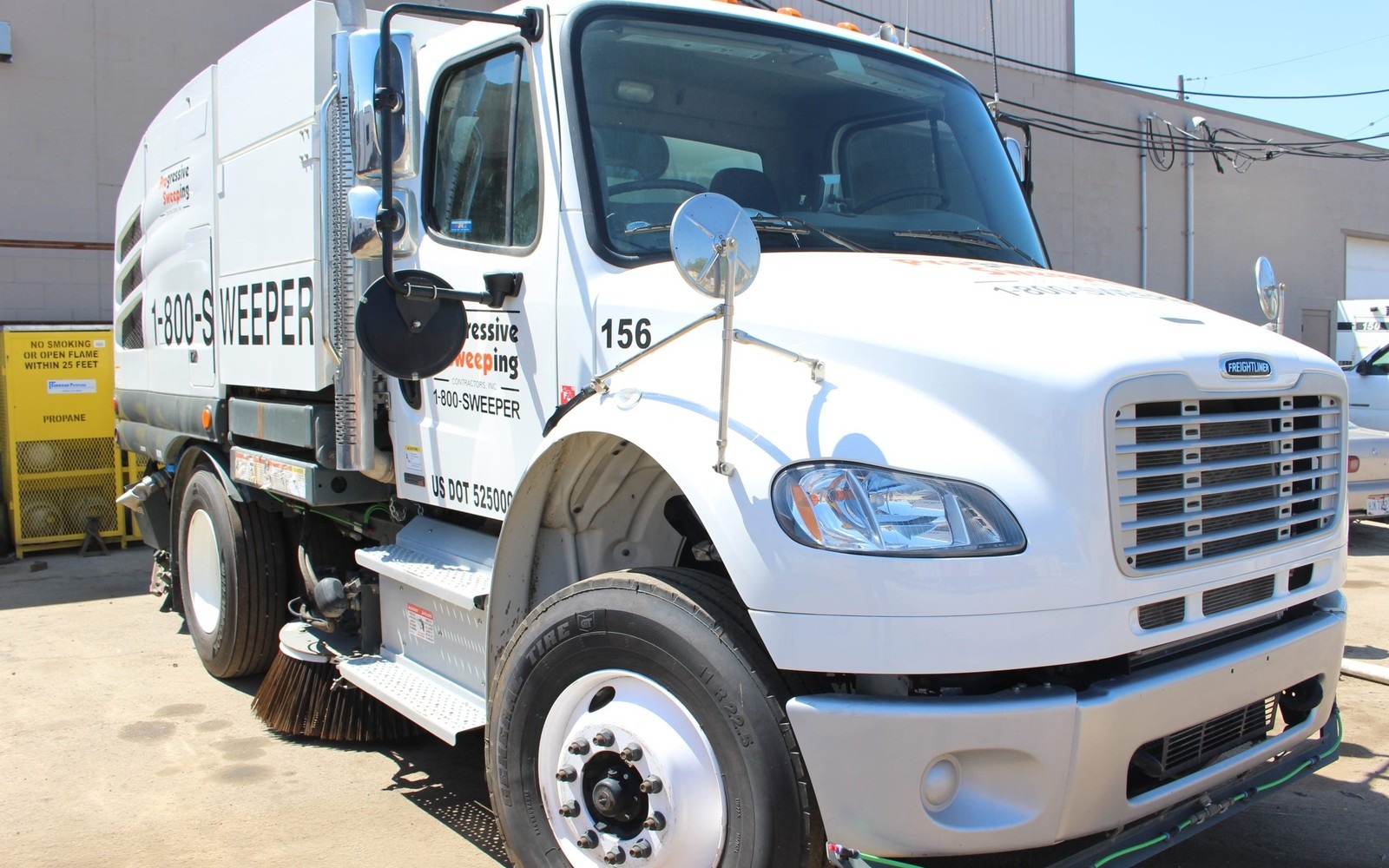
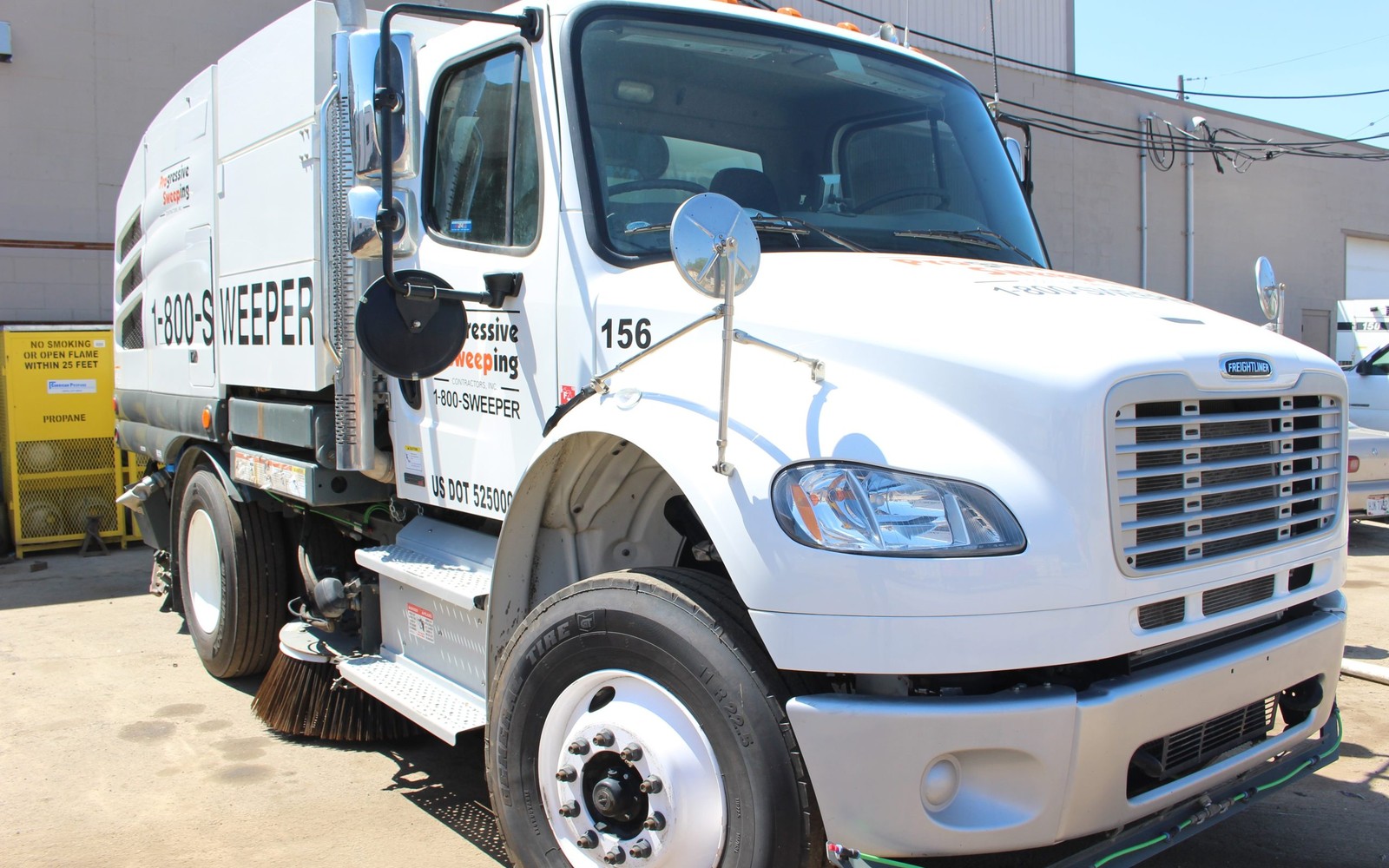
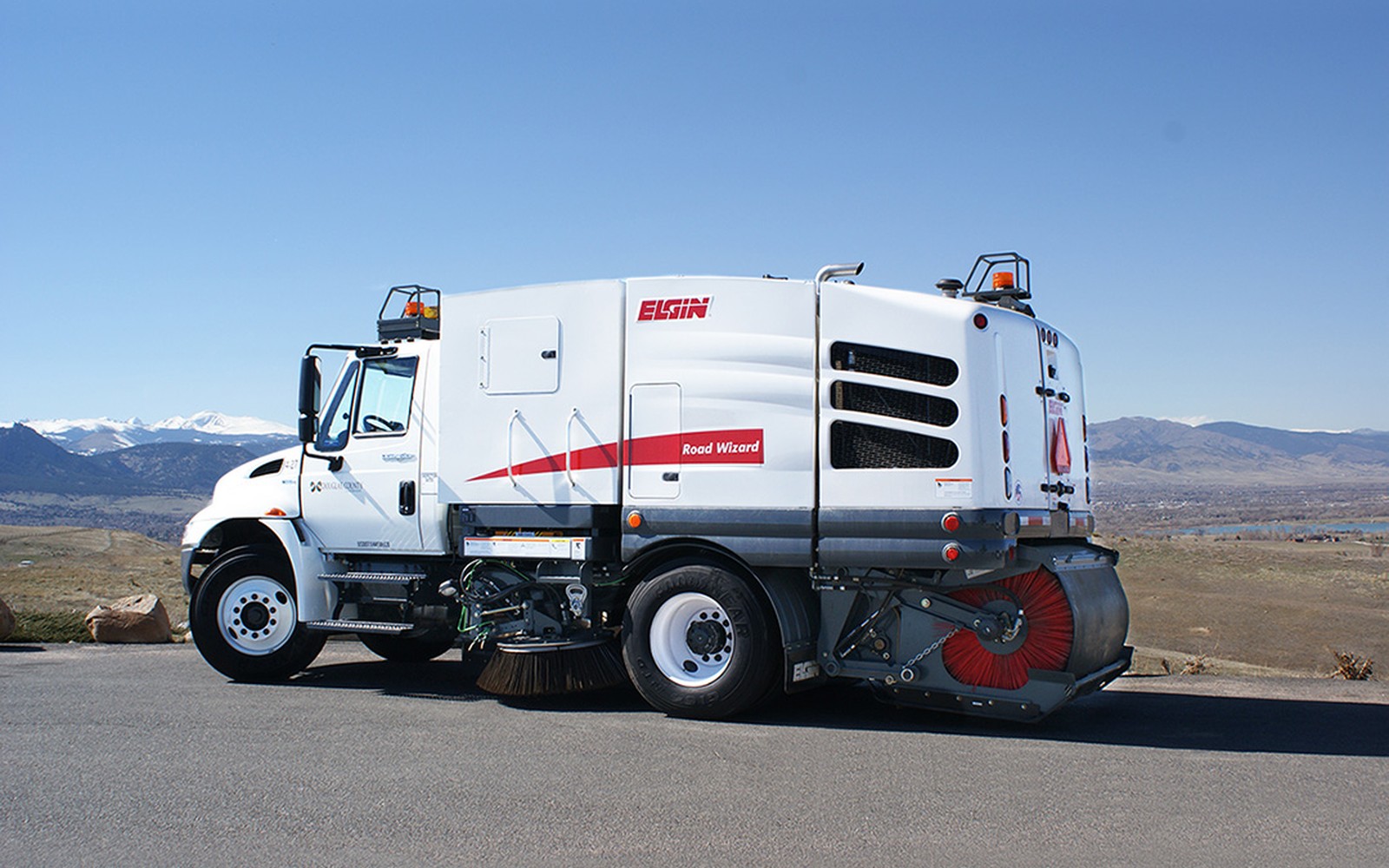
Construction cleanup sweepers are built differently from street-cleaning units. The hoppers are larger and more robust. The gutter brooms are engineered to handle heavier aggregate. Some units have side-discharge capability for quick dump cycles on tight construction sites. The machine needs to handle concrete fines, brick dust, asphalt millings, and the general debris that an active construction site generates, often while working around heavy equipment, material deliveries, and foot traffic.
A standard mechanical broom sweeper in good condition handles most construction cleanup work. The gutter brooms pull material toward the main broom, the main broom picks up into the hopper, and the machine dumps at the site dumpster or haul truck. For jobs with fine-particulate requirements, typically near air-quality sensitive receptors or under a dustless permit condition, a waterless dustless sweeper may be specified.
We finance both new and used construction cleanup units. Used equipment often makes more sense in this segment because construction sites are hard on machines, and a well-maintained four-year-old sweeper at half the cost of new may pencil better over the project horizon than a new unit with a higher payment. We evaluate used machines on age, hours, condition, and the lender's collateral guidelines, and we fund them without the friction that some banks apply to used specialty equipment.
Combination sweeper-vac units that handle both surface debris and catch-basin cleanup are also financeable through us. If your operation does both stormwater infrastructure and surface sweeping, a combination sweeper can consolidate two service lines into one piece of equipment.
EPA and state environmental regulations governing construction site stormwater runoff (NPDES Construction General Permits) require active erosion and sediment controls on projects disturbing one or more acres. Track-out control is one of the Best Management Practices required under most construction stormwater permits. On projects over a certain size or in non-attainment air-quality areas, active sweeping of the site egress is often specified as a required BMP rather than a discretionary one.
This regulatory baseline creates consistent demand for construction cleanup sweeping as a subcontracted service. General contractors managing large commercial, industrial, and infrastructure projects frequently prefer to subcontract track-out control and site sweeping rather than own and operate the equipment themselves. That preference funds the construction cleanup contractor's business model and creates stable project-based revenue that we can underwrite against.
Urban markets with active commercial construction, such as the major metros across Texas, Florida, California, and the Midwest, tend to have the highest density of construction cleanup sweeping work, but it exists wherever significant commercial or infrastructure construction is active. Road construction and infrastructure build-out in particular generates heavy track-out cleanup demand.
The challenge with project-based revenue is that it does not look like predictable monthly deposits in the same way that a service contract does. Bank statements from a construction cleanup contractor may show large irregular deposits as project payments clear, followed by quieter periods between jobs. We know what that looks like and we underwrite for it. Three months of bank statements showing the deposit pattern, average daily balance, and overall revenue level are more informative than a single month's snapshot.
Active project agreements or GC relationship history are supporting documentation that strengthens the underwriting picture. A contractor who can show a history of working for three or four established GC accounts, even without a formal long-term contract in place, is demonstrating a revenue base that is recurring in practice if not on paper.
For contractors with business credit challenges, we offer bad-credit sweeper financing that evaluates the operation's actual financial health rather than stopping at the credit score. challenged credit applications are reviewed on their full merits. Application-only financing up to $400,000 removes the tax-return requirement for qualified applicants, which simplifies the process significantly for smaller operations that do not maintain elaborate financial records.
You have a project coming up that requires a sweeper on-site. Apply now and we can have the financing closed before mobilization day. New or used construction sweepers, $50,000 and up, decisions in 24 hours.
Equipment questions
Clear answers before the equipment file moves to review.
Yes. A signed subcontract or letter of intent from a GC, even if the project start date is a few weeks out, is strong supporting documentation. We can approve and close the financing before the project begins so the equipment is ready on mobilization day. Future revenue supported by a documented contract is something we underwrite against regularly.
Yes. If the job requires a waterless or dustless sweeper, a regenerative-air unit with PM-10 certification, or any other specification, we finance the equipment the job requires. We do not limit what you can buy. Tell us the spec, the equipment you have identified, and the project details, and we structure around the actual machine.
We see this pattern constantly in project-based businesses. Underwriting looks at the bank statement picture across three months: what came in, what went out, what the average balance looks like. Large periodic deposits from project payments read differently than smooth monthly income, and we account for that. It is the average revenue trend that matters, not whether deposits are evenly spaced.
Yes. We can structure a single financing agreement covering both units if the deal size and the operation support it. Multi-unit purchases can be underwritten as one application rather than two separate deals, which simplifies closing. Tell us the total purchase amount, the machines you are buying, and the project situation, and we will structure accordingly.
Absolutely. The fact that you own one unit free and clear actually strengthens your application because it shows asset stability. Adding a second unit for project backup or fleet growth is exactly the kind of deal we structure. If the first unit has equity in it, a sale-leaseback could also free cash to reduce the acquisition cost of the second machine.
Keep exploring
Compare adjacent equipment, model, market, and service-area pages.
Equipment desk
Send the machine, seller, hours, and timing. The equipment desk will organize the next step.